Quick answer
Traditional pooja room Vastu puts the mandir in the north-east corner, with east and north as the next choices, and has you face east or north while praying. In flats where the north-east is already a bedroom, bathroom or balcony, a wall unit on an east or north living-room wall is the usual answer.
Most Vastu advice assumes you are building a house from scratch. In a Bengaluru flat the walls are fixed, and the north-east corner is often the master bedroom or a balcony. The real question is how to follow the guidance inside the plan you have.
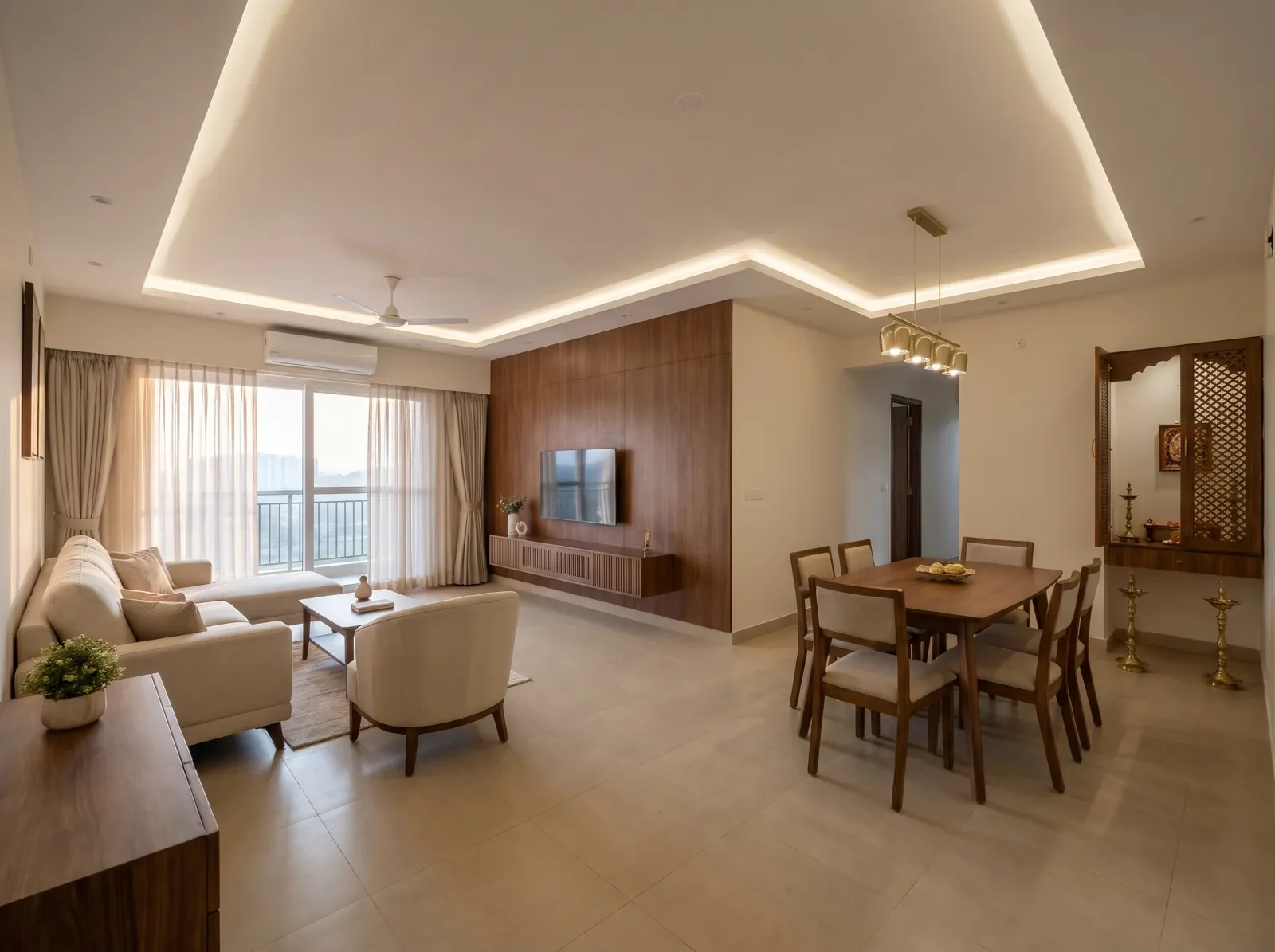
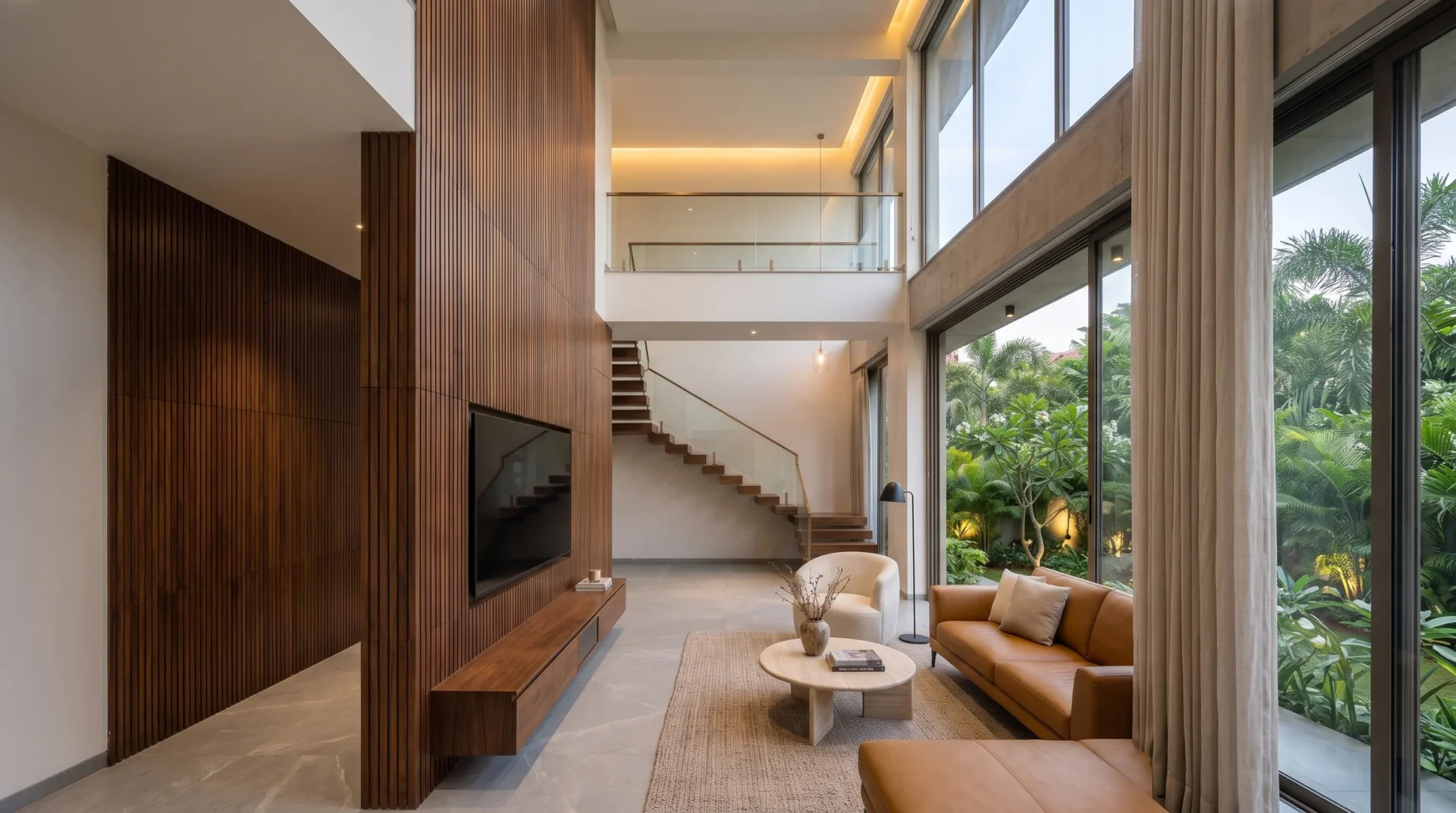
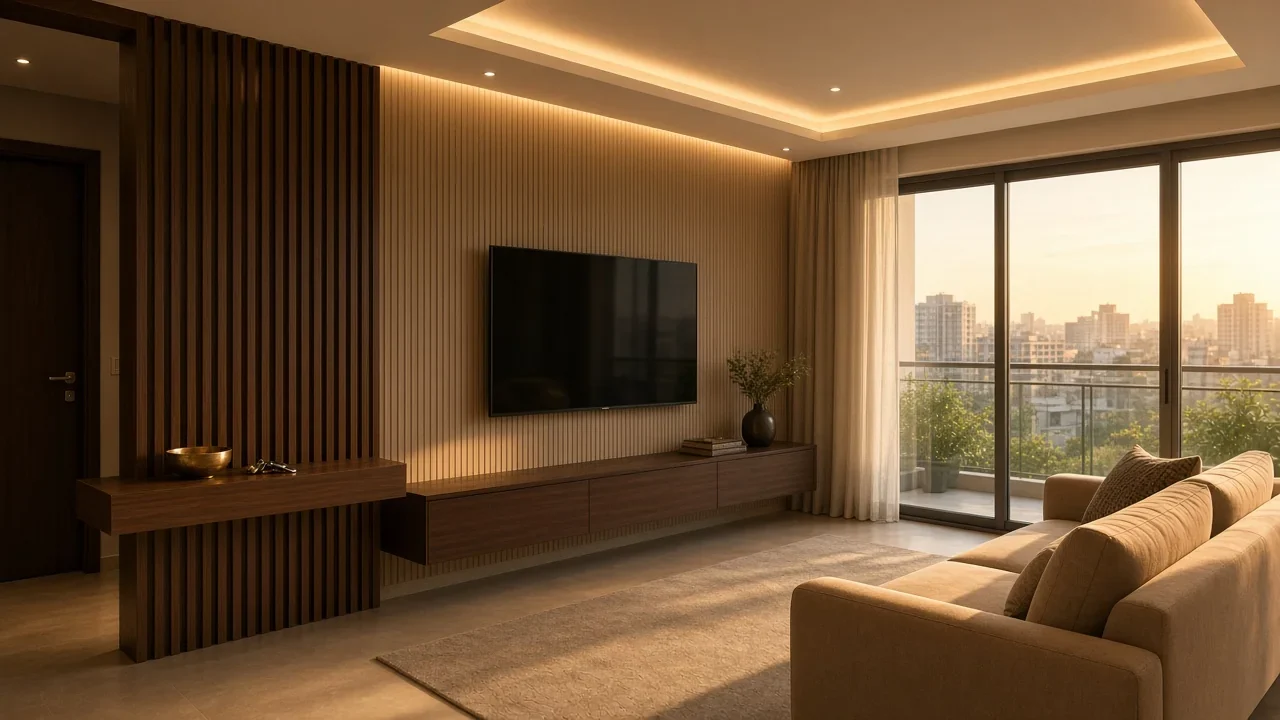
We plan the pooja space as part of full home interiors, alongside the living room, the foyer and the kitchen we design for your home, so the mandir gets a proper place, not whatever wall is left over.
Which direction is best for a pooja room as per Vastu?
Vastu Shastra is a traditional Indian system of guidelines for how a home is laid out. For the pooja room, it ranks directions in a clear order:
| Choice | Zone | When it works |
|---|---|---|
| First | North-east (Ishanya) corner | A free corner of the living room, or a spare room in that zone |
| Second | East | An east-facing wall in the living or dining area |
| Third | North | A north wall, often near the foyer or a passage |
We treat this as traditional guidance that we design around, not a promise of outcomes. Our job is a pooja space that sits in the zone you want and works every day.
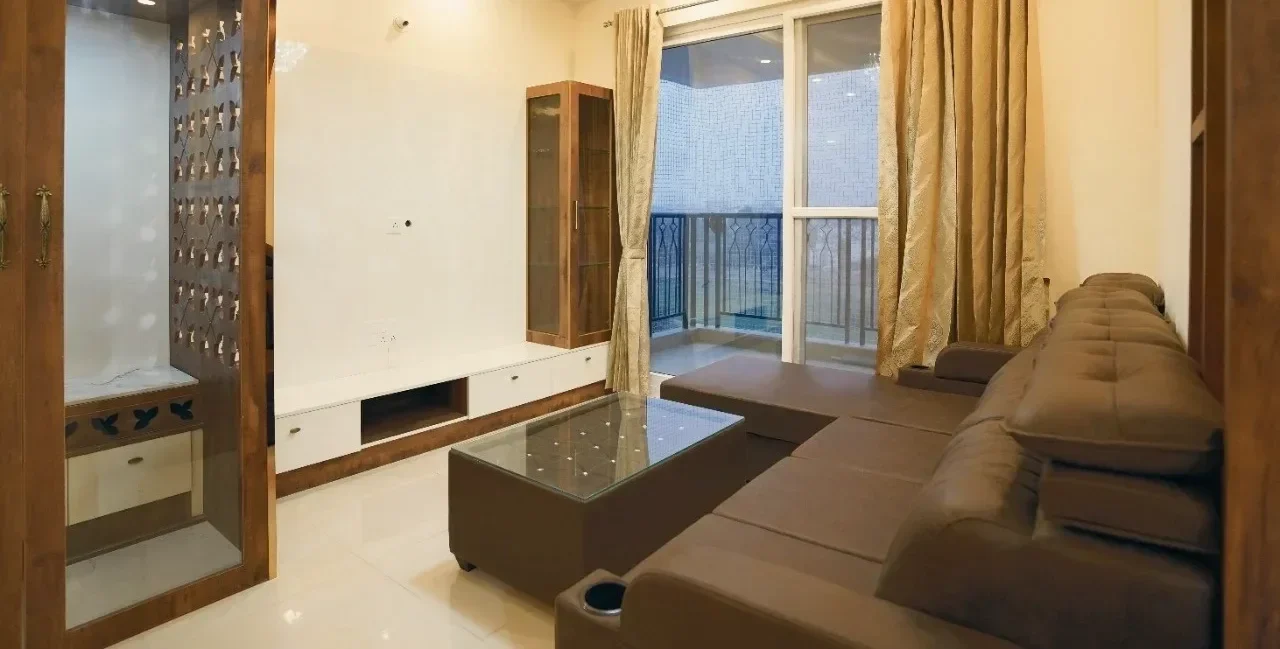
Which direction should you face while praying?
The usual guidance is that you face east or north while praying. In practice, this decides which wall the unit goes on. A unit on an east wall has you facing east. A unit on a north wall has you facing north.
Keep the idols on a raised ledge, never on the floor. As general guidance, set it so the idols sit around chest height when you pray, seated or standing. And leave a clear patch of floor in front, wide enough for a mat or a low seat.
Where should you not keep a pooja room?
Most Vastu guidance asks you to avoid these spots, and most make design sense too:
- Inside a bedroom, especially the master bedroom.
- Under a staircase, common in duplexes and villas.
- On a wall shared with a toilet or bathroom.
- In the south or south-west of the home.
- In a basement.
For colour, Vastu guidance usually favours light, calm shades. We cover the options in our guide to pooja room colour combinations.
What if the north-east corner of your flat isn’t free?
This is the most common situation in Bengaluru apartments. Here is how we usually handle it:
| What sits in the north-east | What we usually suggest |
|---|---|
| Master bedroom | A wall unit on an east or north wall of the living room |
| Bathroom or utility | Move to the next zone, and keep the unit off any wall shared with the bathroom |
| Balcony | An east-facing wall just inside, never out on the balcony itself |
| Kitchen | A closed niche in a clean corner, away from the hob and sink, or a living-room wall instead |
| Structural pillar | Build the unit around the pillar so it looks planned |
| No free wall at all | A slim cabinet with doors near the entrance, on a wall that has you facing east or north |
We suggest a kitchen niche only when there is no living-room option.
Where does a pooja unit go in a 2BHK, 3BHK or 4BHK?
Floor plan size changes the format more than the direction does.
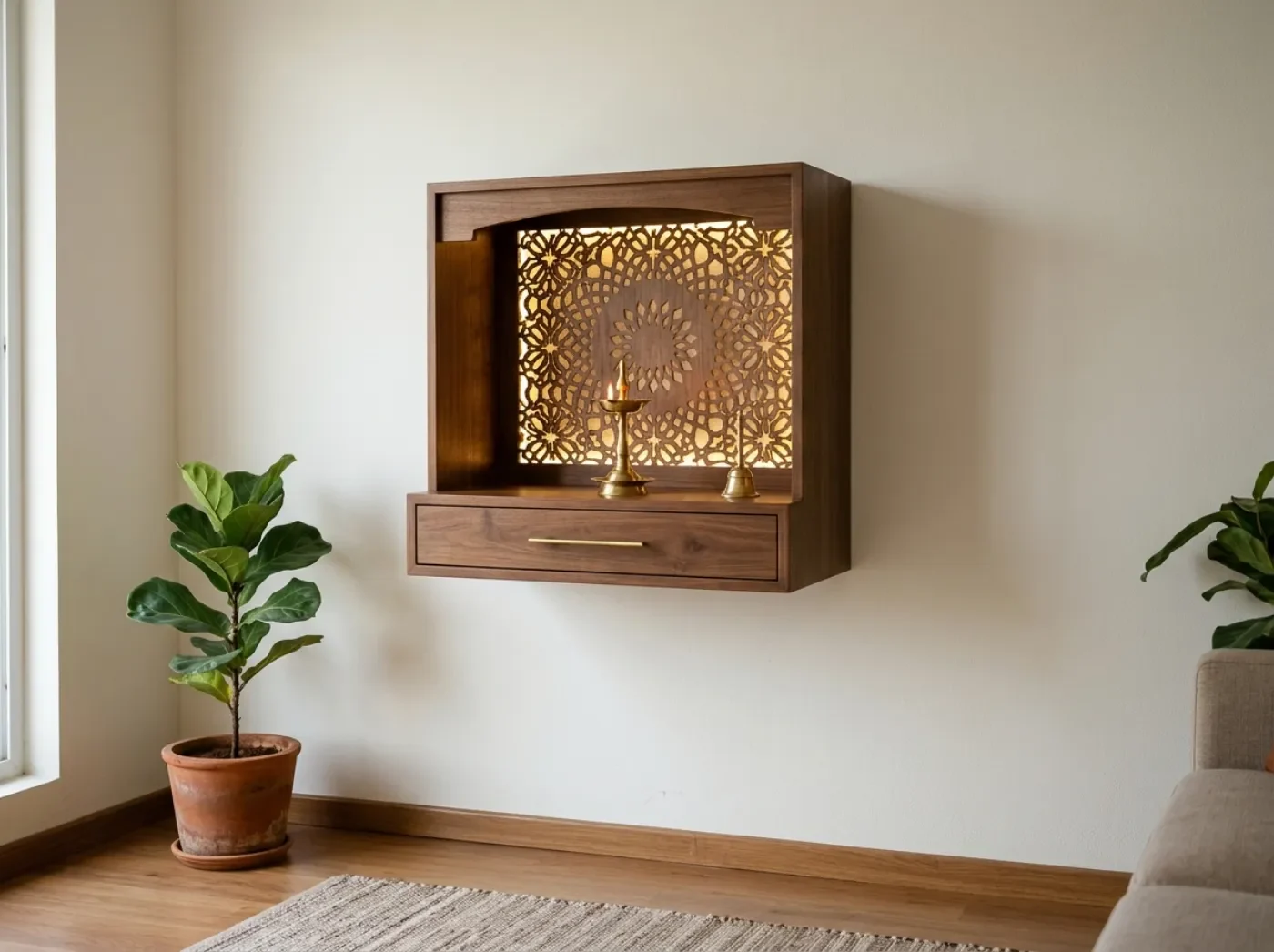
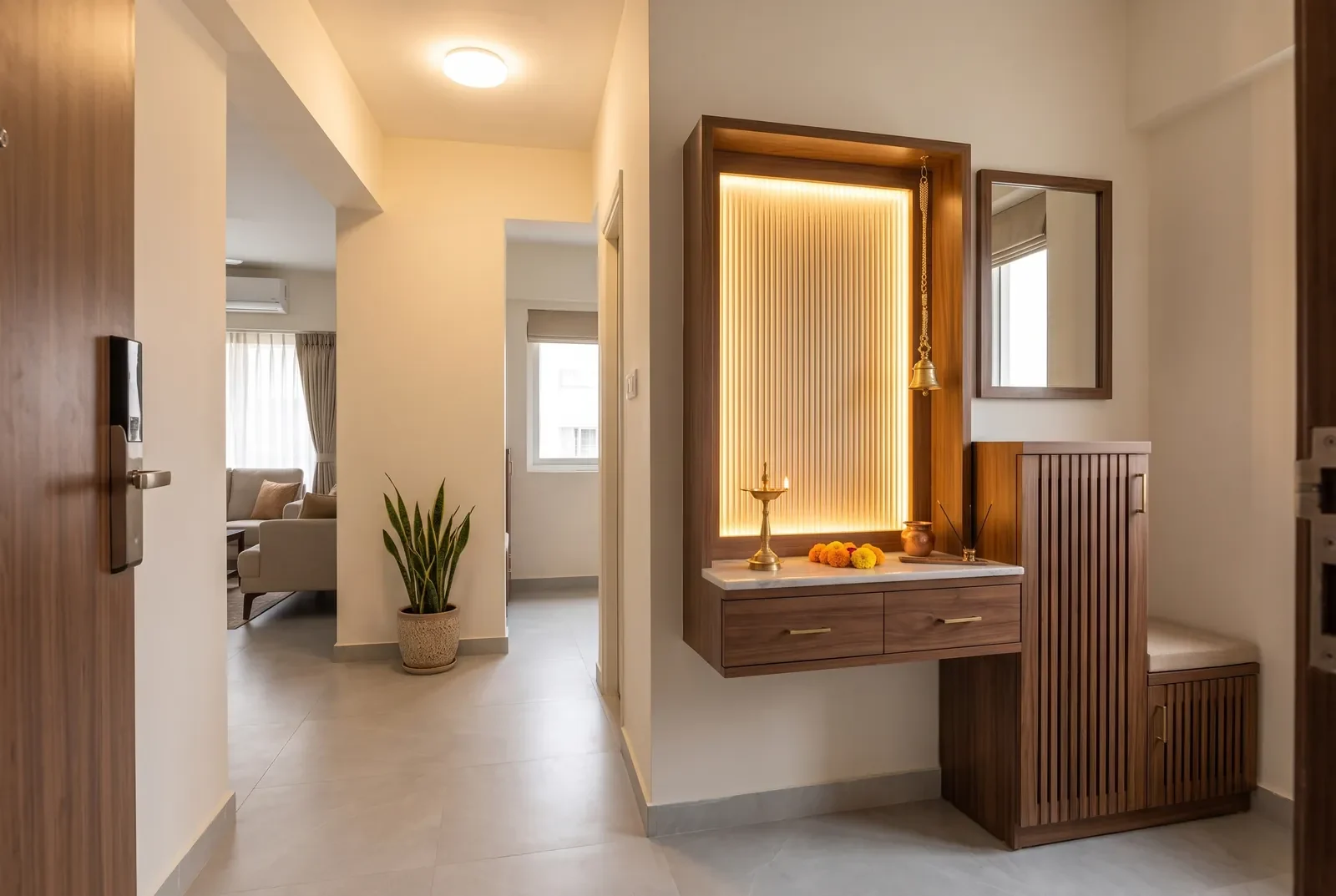
- 2BHK: most have no separate pooja room. We usually fit a wall-mounted pooja unit with a lit back panel and drawers near the entrance, beside a shoe unit with a seat. Our 2BHK interiors page shows how that wall comes together.
- 3BHK: a pooja unit sized for the wall, often built into the living-room storage, with drawers for puja items, brass bells and a diya.
- 4BHK: there is often space for a separate pooja room. We design the unit, the back panel and its lighting, the doors and the storage.
For compact layouts, our guide to modern pooja unit designs for apartments has more ideas, and the pooja room designs page shows every format we build.
Which floor is best for a pooja room in a duplex or villa?
The usual guidance is the ground floor, in its north-east. Upper floors are fine if the room sits in the right zone. The basement is the floor to avoid, and in a duplex, don’t tuck the pooja room under the staircase just because the space is free.
Design details that support the Vastu guidance
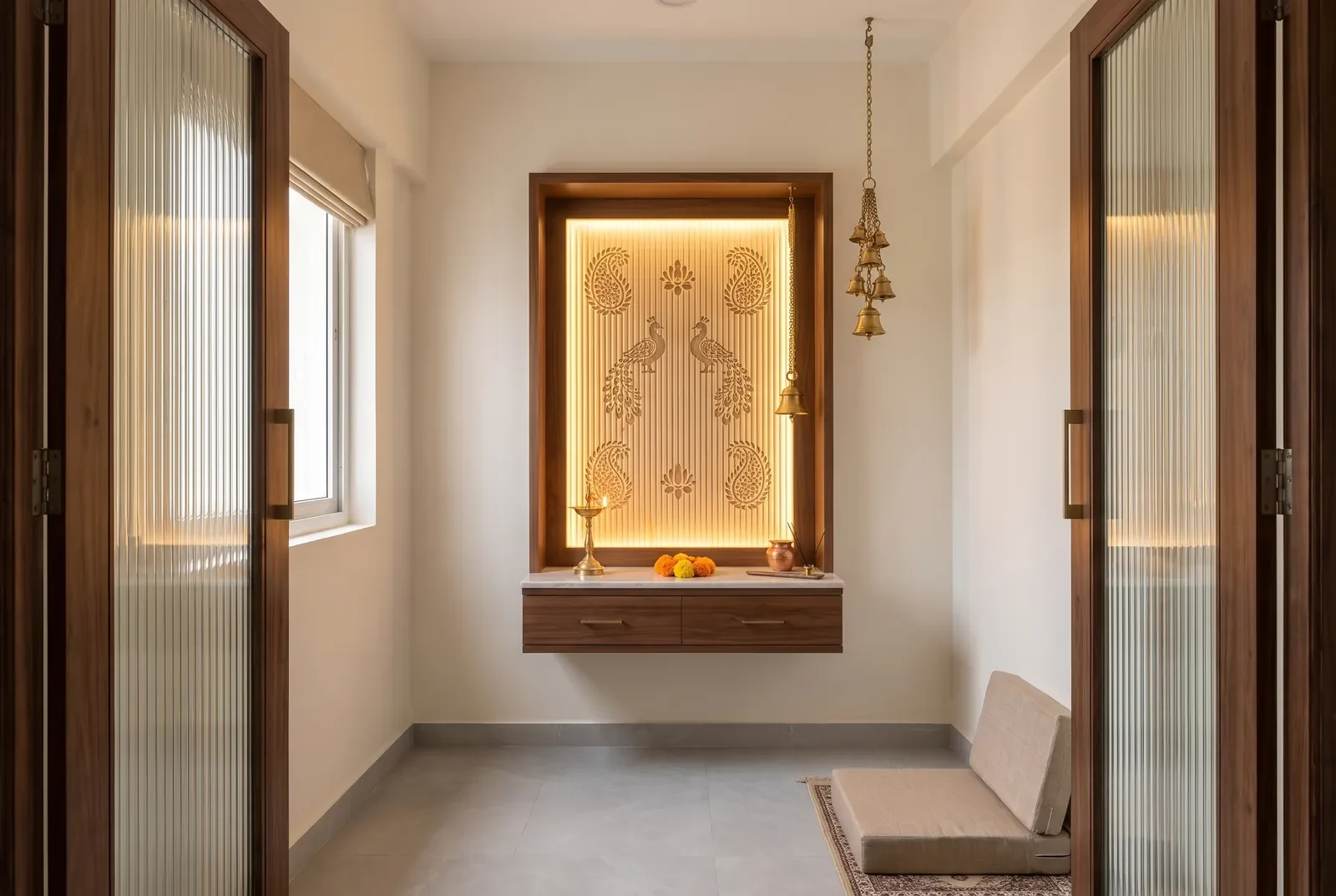
- Air for diyas and incense. A closed box traps smoke and heat. Jaali doors or a jaali back panel let air through. Our post on pooja room door design covers the options.
- Built-in lighting. A lit panel behind the mandir and lights in the niche, planned with your electrical points so no wires show.
- Board that suits the room. In our pooja units the carcass is MR plywood and the shutters are HDHMR board, finished in laminate, acrylic or PU.
Every pooja unit is made in our own 20,000 sq ft factory in JP Nagar, and every Q Oak home carries a 15-year material warranty.
Planning a Vastu-friendly pooja space with Q Oak
Bring your floor plan to our JP Nagar or Whitefield studio, or share it on a call, and tell your designer early that Vastu matters to you. We prepare an itemised quote from the floor plan first, then measure the site and show the pooja unit in 3D after the advance. Most homes are handed over in 45 to 60 days. When you’re ready, get an itemised quote that plans your pooja space.
FAQs
What are the basic Vastu rules for a pooja room?
Place it in the north-east, or east or north if that corner isn’t free. Face east or north while praying, keep idols on a raised ledge, and avoid bedrooms, bathroom walls and the space under the stairs.
Can the pooja unit be in the kitchen?
It can, if there is no better option. Keep it in a clean corner away from the hob and sink, and give it shutters so it stays closed while you cook.
Can a pooja room share a wall with a bathroom?
Traditional guidance says no. If the plan forces it, choose a different wall in the same zone, or keep a storage unit between the mandir and the bathroom wall.
What should be kept in the pooja room?
Keep it simple: the idols or pictures on a raised ledge, a diya, a bell, incense, and a drawer for wicks, matches and puja items. Skip unrelated storage so the space stays calm.