Quick answer
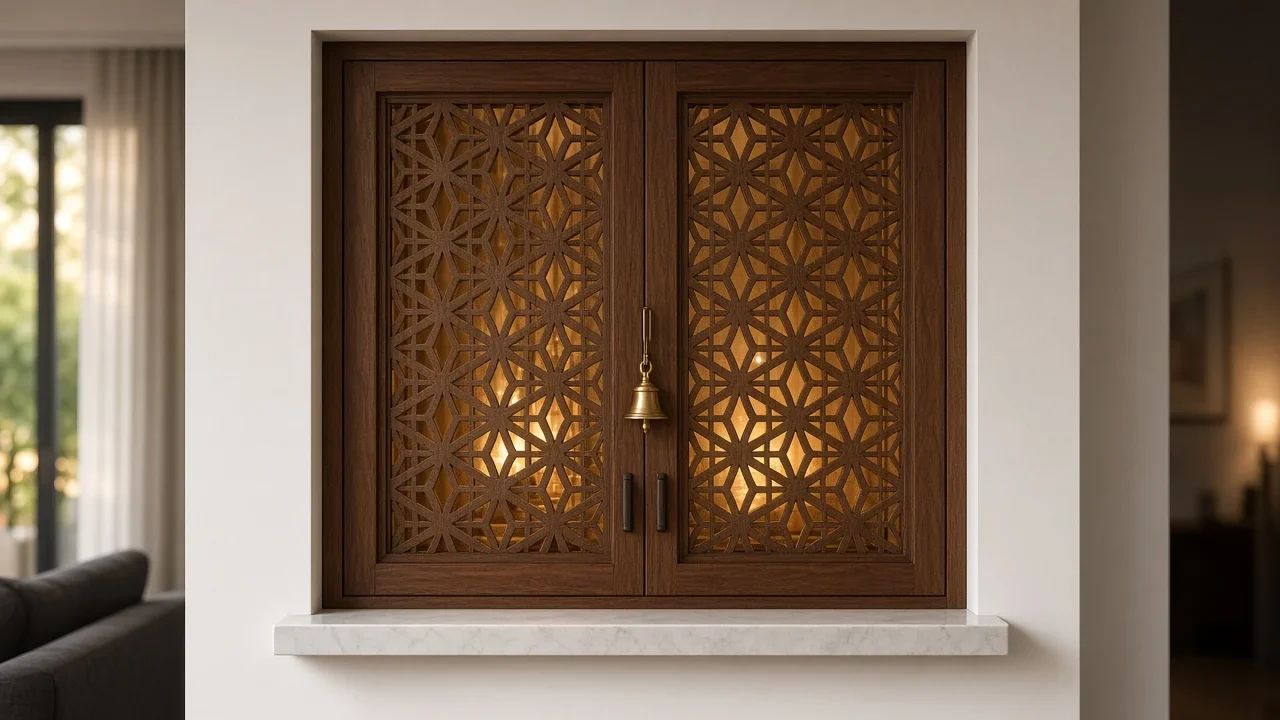
For most Bengaluru apartments, the best pooja room door design is a pair of jaali (lattice) doors on a wall unit or alcove. Jaali lets diya smoke and incense escape, keeps the mandir in view, and closes neatly after prayer. Glass suits small homes that need light. Solid wood with brass suits a traditional pooja room.
The door is the part of a pooja space you see most. It is what guests notice from the sofa, and what you open every morning. Getting it right is less about the pattern and more about air, light, size and how the door sits with the rest of the room.
We plan pooja units as part of complete home interiors, so the door finish usually picks up the TV wall, the foyer storage or the modular kitchen next to it. Here is how we think it through with families, and nine door ideas that work in real flats and villas.
Which door is best for a pooja room?
There is no single best door, but there is a best door for your space. Use this as a starting point.
| Door type | Works best for | Watch out for |
|---|---|---|
| Jaali (lattice) doors | Wall units and alcoves in apartments | Very fine patterns collect dust |
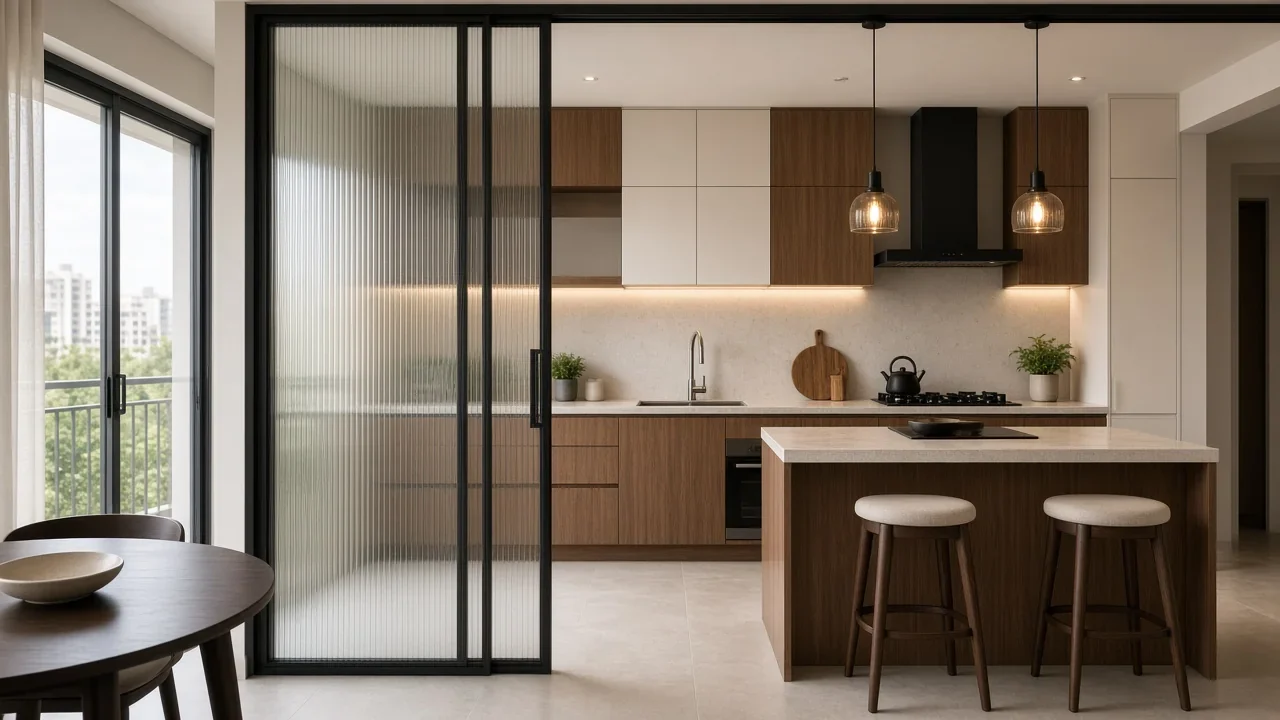
| Fluted or frosted glass | Small homes, dark corridors | Needs a frame strong enough for daily use |
| Solid wood with brass inlay | Separate pooja rooms, traditional homes | Needs vents or a jaali panel for smoke |
| Folding doors | Narrow passages where a swing won’t fit | Hardware has to be good to stay aligned |
| Sliding doors | Pooja rooms opening off the living room | Leaves part of the opening covered |
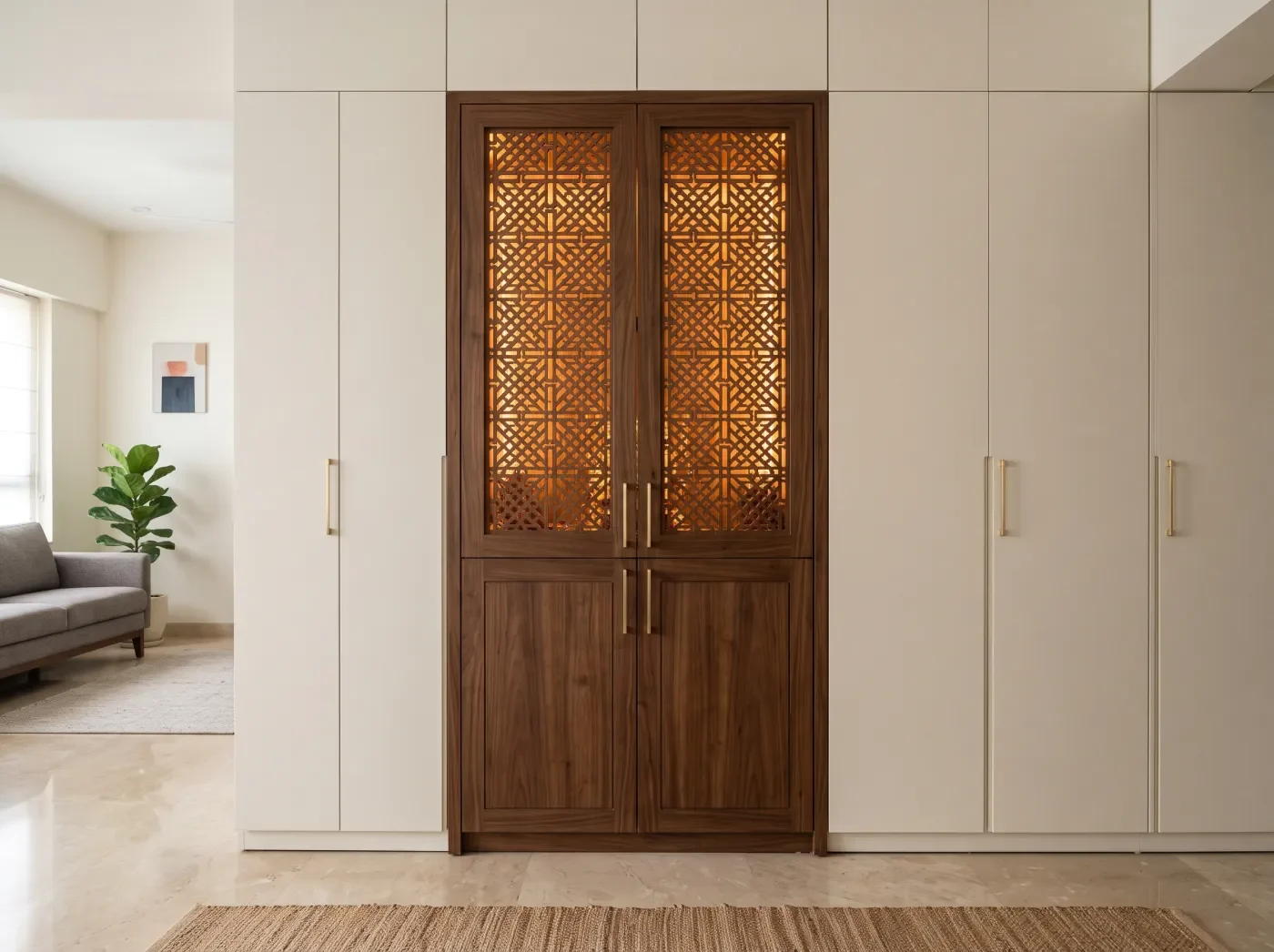
Jaali is the default for a reason. A lit lamp needs air, and a closed solid door traps smoke and heat. A pattern cut through the shutter solves both, and the light behind it turns the unit into a quiet feature even when the doors are shut.
What are the best jaali door designs for a pooja room?
The pattern should match the scale of the door. A small wall unit looks calm with a simple geometric or lotus grid. A tall pooja room door can carry a bolder mandala, bell or temple-arch motif.
A few rules we follow:
- Keep the openings large enough to wipe. Very fine fretwork looks lovely on day one and holds dust by month three.
- Put the jaali in the top two thirds of the door. A solid lower panel protects it from feet, mops and pets.
- Back-light it. A warm strip or panel behind the jaali lights the pattern without glare.
At Q Oak, jaali doors and back panels are made in the pattern you choose, in our own JP Nagar factory.
What size should a pooja room door be?
Size depends on the format you pick.
- Wall-mounted unit or cabinet: two shutters, each usually 300 to 450 mm wide, so they open fully without hitting a sofa or a wall.
- Alcove: doors sized to the alcove, with a small reveal so the frame looks intentional.
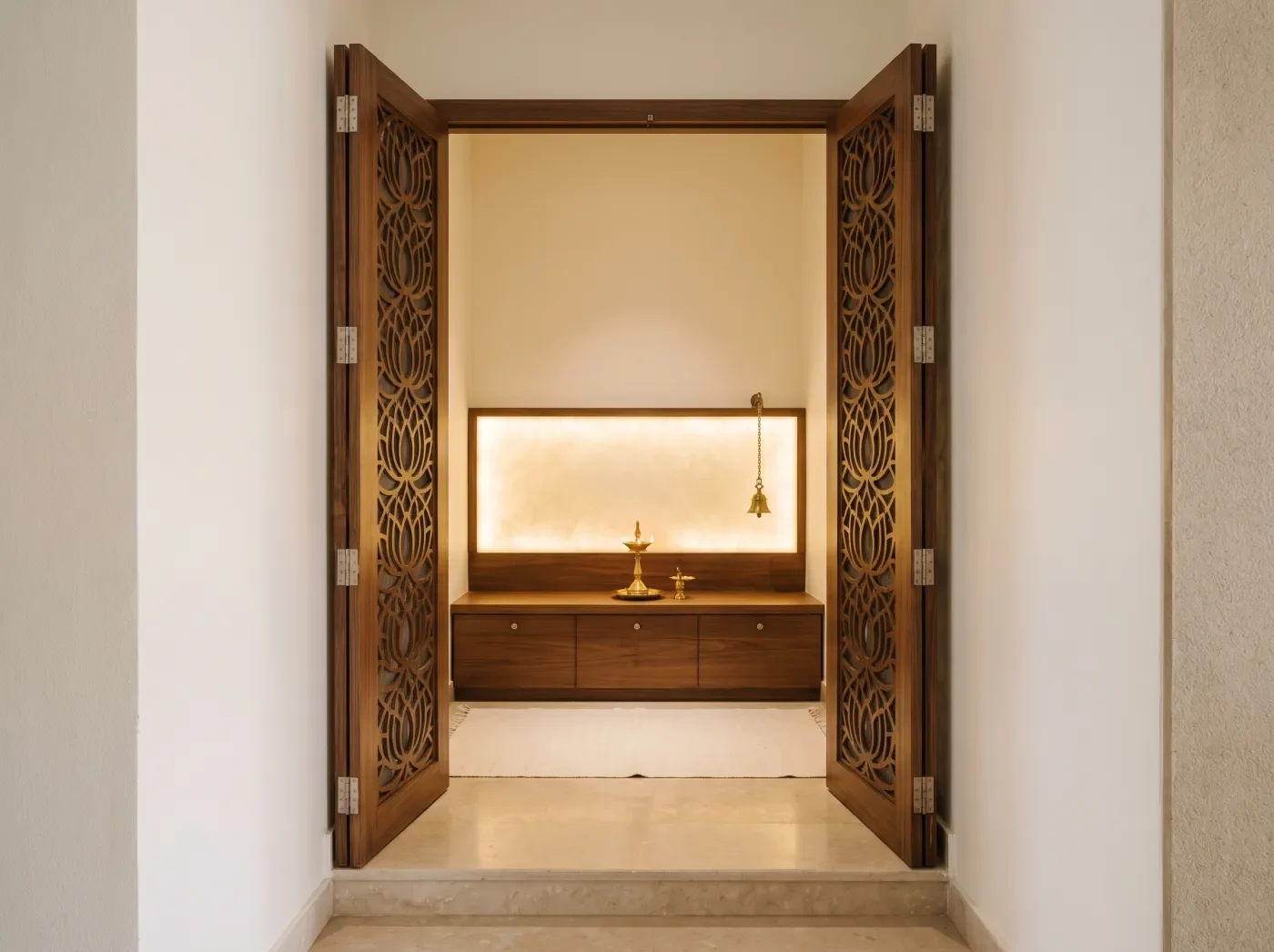
- Separate pooja room: a door opening of roughly 750 to 900 mm, wide enough to step in with a thali, with double doors if you want the full mandir visible.
Check the swing. If the doors open into a passage or a dining chair, folding or sliding doors are kinder to the room.
Which material is right: wood, HDHMR, glass or brass?
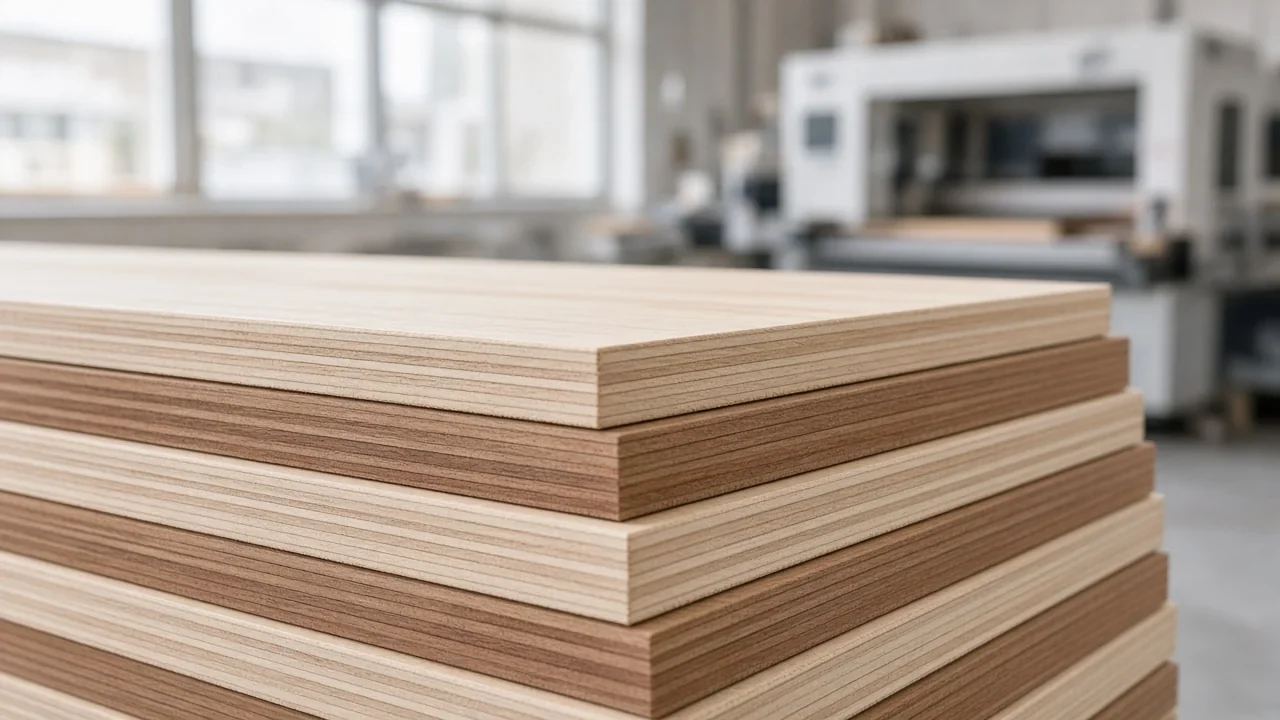
What you see on the outside matters, but so does the board underneath. In the units we build, the carcass is MR plywood and the shutters are HDHMR board, finished in laminate, acrylic or PU. HDHMR stays flat and holds hinges well, which is what keeps a jaali door from sagging. Our materials guide explains each board.
On top of that you can add:
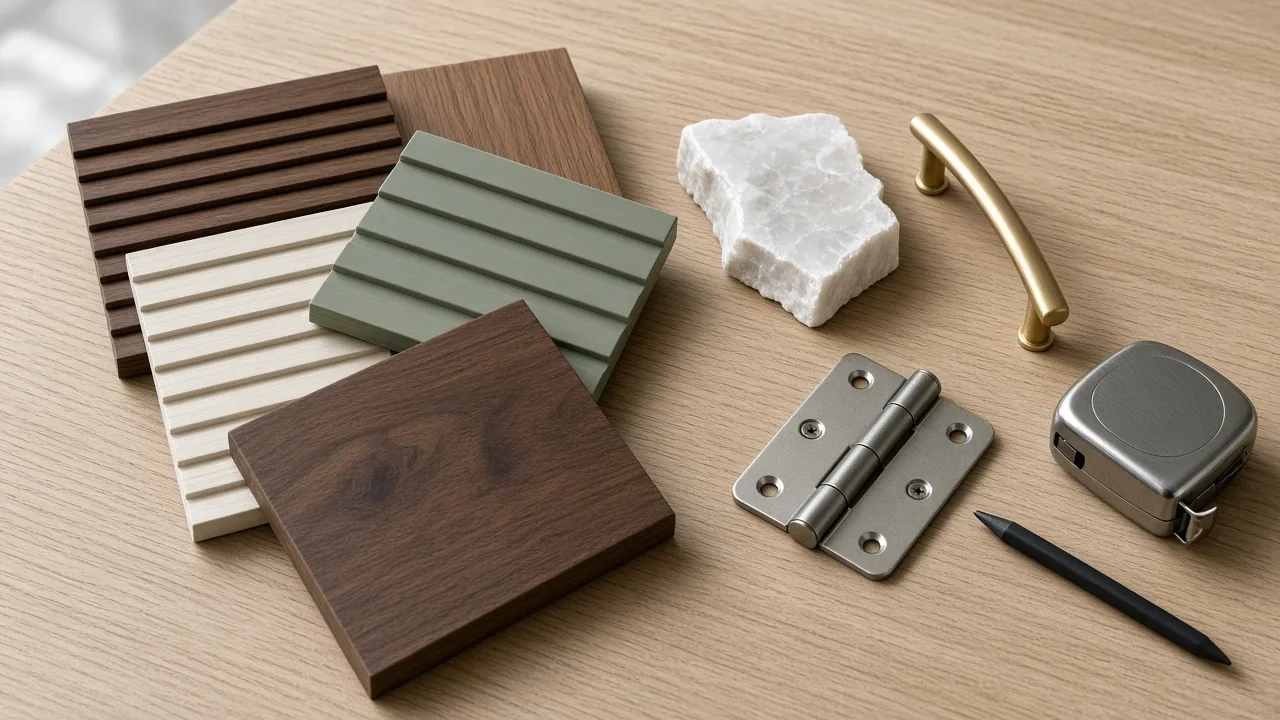
- Wood-look or veneer finishes for warmth.
- Fluted or frosted glass set in a frame, for light without showing the clutter inside.
- Brass inlays, handles and bells. Brass bells and a diya come with our pooja units, hung at the right height.
How do you light a jaali pooja door?
Use warm white light, around 2700 to 3000K, behind the jaali or along the top of the niche. Plan the switch and wiring before the unit is made, so no cables show on the back panel. Keep any open flame on a stone or metal ledge, with a clear gap below the shutter.
Does a pooja room door need to follow Vastu?
Many families ask for double doors, a wood or wood-look finish, and a pooja that faces east or north. If Vastu matters to you, tell your designer at the first meeting, because it affects where the unit goes, not just the door. We make Vastu compliant designs, and our post on pooja room colour combinations covers colours that sit well with it.
9 pooja room door ideas that work in Bengaluru homes
- Twin walnut jaali doors with a backlit panel behind.
- A geometric jaali in the top half and a solid panel below.
- Fluted glass doors in a slim bronze frame for a small 2BHK.
- Folding jaali doors for a pooja room off a narrow passage.
- Sliding jaali panels that double as a living room partition.
- Solid wood doors with brass bell inlays and a carved arch.
- Off-white lacquer doors with a gold-toned jaali, for a calm modern home.
- A single tall jaali door on a corner unit in the dining area.
- Glass doors with a jaali back panel, so the mandir stays in view.
For more layouts, see our guide to modern pooja unit designs for apartments, or browse the formats on our pooja room designs page.
Planning your pooja door with Q Oak
Share your floor plan with a designer at our JP Nagar or Whitefield studio, or on a call. The pooja unit, its doors, jaali work and lighting each appear as lines in your itemised quote, and every Q Oak home carries a 15-year material warranty. When you’re ready, ask for an itemised quote for your home.
FAQs
Which door is best for a pooja room in an apartment?
Jaali doors on a wall unit or alcove suit most apartments. They let smoke and heat out, keep the mandir visible, and close neatly when the pooja is done.
What is the standard size of a pooja room door?
For a separate pooja room, a door opening of about 750 to 900 mm works well. For a wall unit, each shutter is usually 300 to 450 mm wide.
Can a pooja door be made of glass?
Yes. Fluted or frosted glass in a sturdy frame lets light through and hides clutter. Pair it with a jaali back panel or vents so the lamp gets air.
What material is used for jaali doors?
In our pooja units the shutters are HDHMR board, which stays flat and holds hinges well, finished in laminate, acrylic or PU. The jaali is cut in the pattern you choose.