Quick answer
A profile light is a slim LED channel set into or onto the ceiling, showing a clean line of light. A cove light is a hidden strip that bounces light off a recessed ceiling edge. Cove suits living rooms and bedrooms; profiles suit foyers, kitchens and TV walls. Plan both after the furniture layout, each on its own switch.
Most people pick a profile light ceiling or a cove design from photos. Then the sofa moves, and the line of light ends up over nothing in particular.
When we plan full home interiors for Bengaluru apartments and villas, the ceiling is drawn after the furniture, not before. The same goes for the strip over the counter in our kitchen interiors. Here is where each type belongs and how to place it.
What is a profile light ceiling, and how is it different from cove lighting?
A profile light is an LED strip inside an aluminium channel with a diffuser on top. It is recessed into a gypsum ceiling or fixed onto the surface, so the light shows as a sharp, even line.
A cove light hides the strip. It sits in a recessed edge or ledge of the false ceiling and throws light up and across the ceiling. You see the glow, not the strip.
Rope light is the older flexible tube people still ask about. As general industry guidance, it gives a less even glow than an LED strip and has mostly been replaced by strips in coves.
| Profile light | Cove light | Spotlights | |
|---|---|---|---|
| What you see | A crisp line of light | A soft glow on the ceiling | Pools of light on a surface |
| Best for | Foyers, corridors, kitchens, TV walls | Living rooms, bedrooms, pooja areas | TV wall, dining table, art |
| Plan around | Where the line starts and ends | The depth of the cove | The furniture below |
Which rooms suit profile lights, and which suit cove lights?
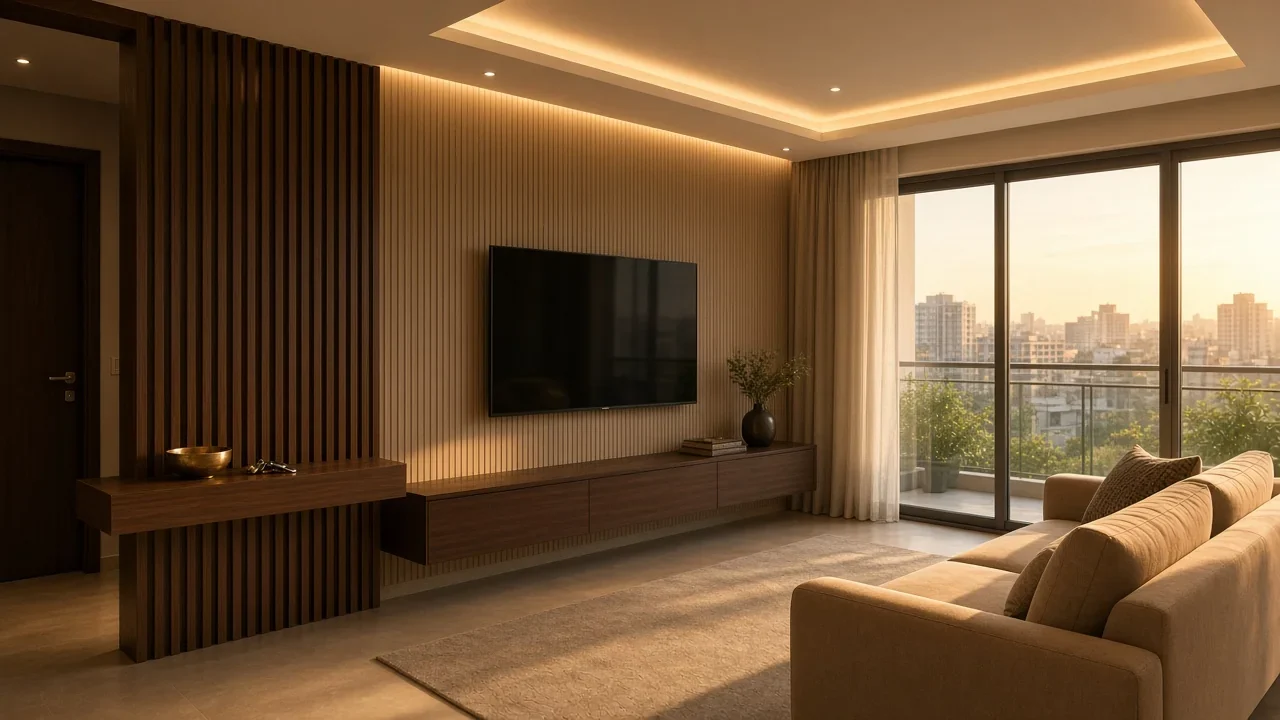
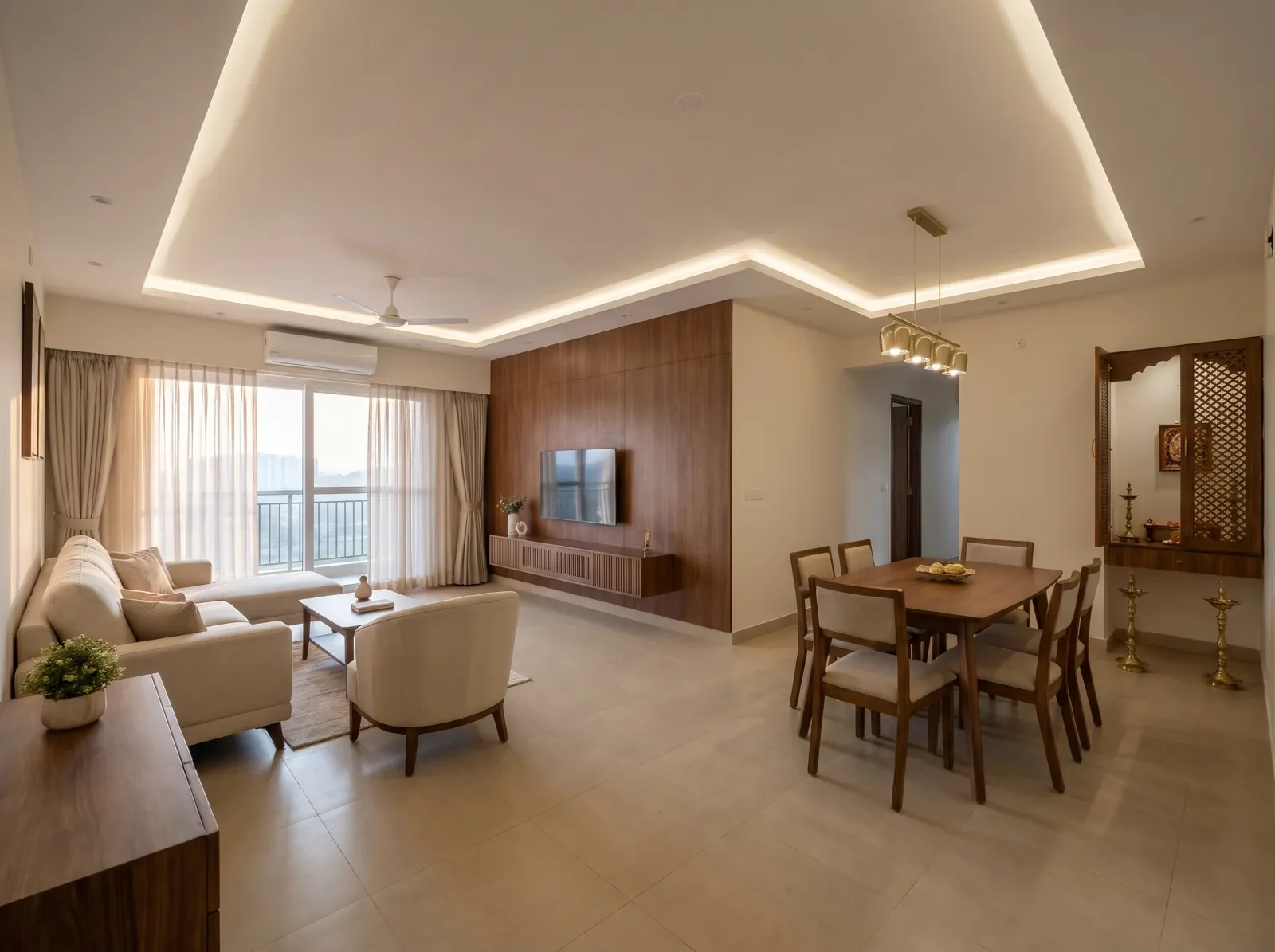
- Living room. A peripheral cove, a border of gypsum around the room with warm light hidden in it, gives the room evening light without glare. Add spotlights or a profile line on the TV wall for a feature.
- Bedroom. Cove light or a floating panel lit along its edges, so nobody lies in bed looking into a bright fitting.
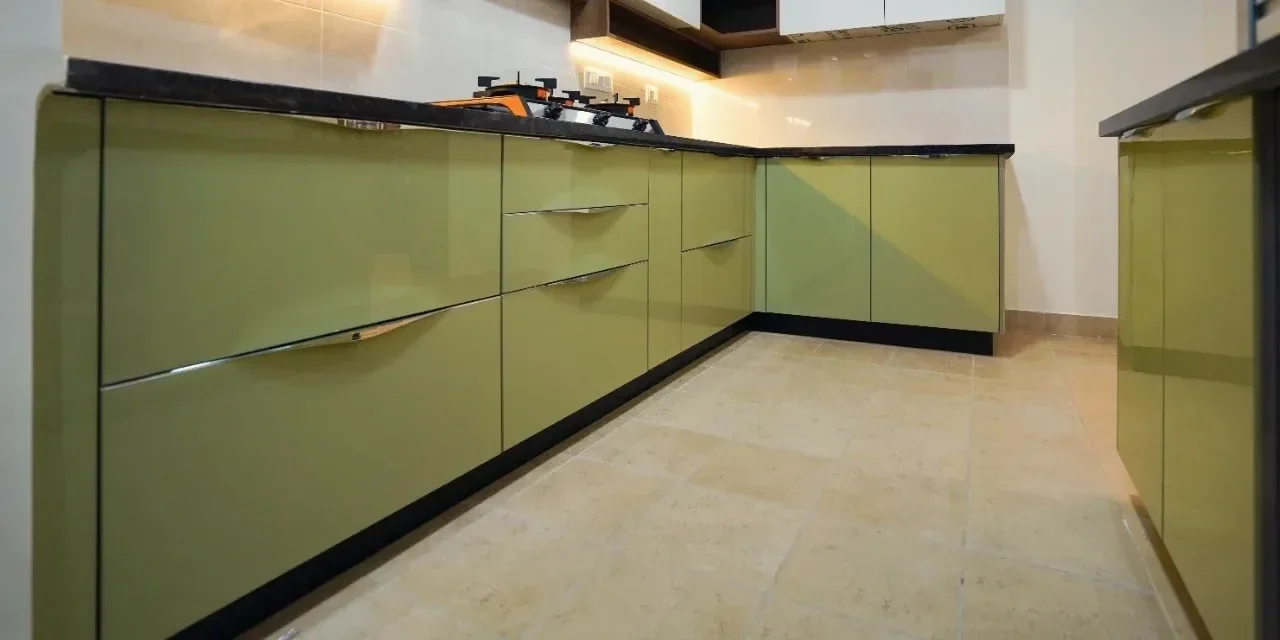
- Kitchen. Profiles or recessed downlights over the counter, plus light under the wall cabinets.
- Foyer and corridor. A single profile line draws you in from the door.
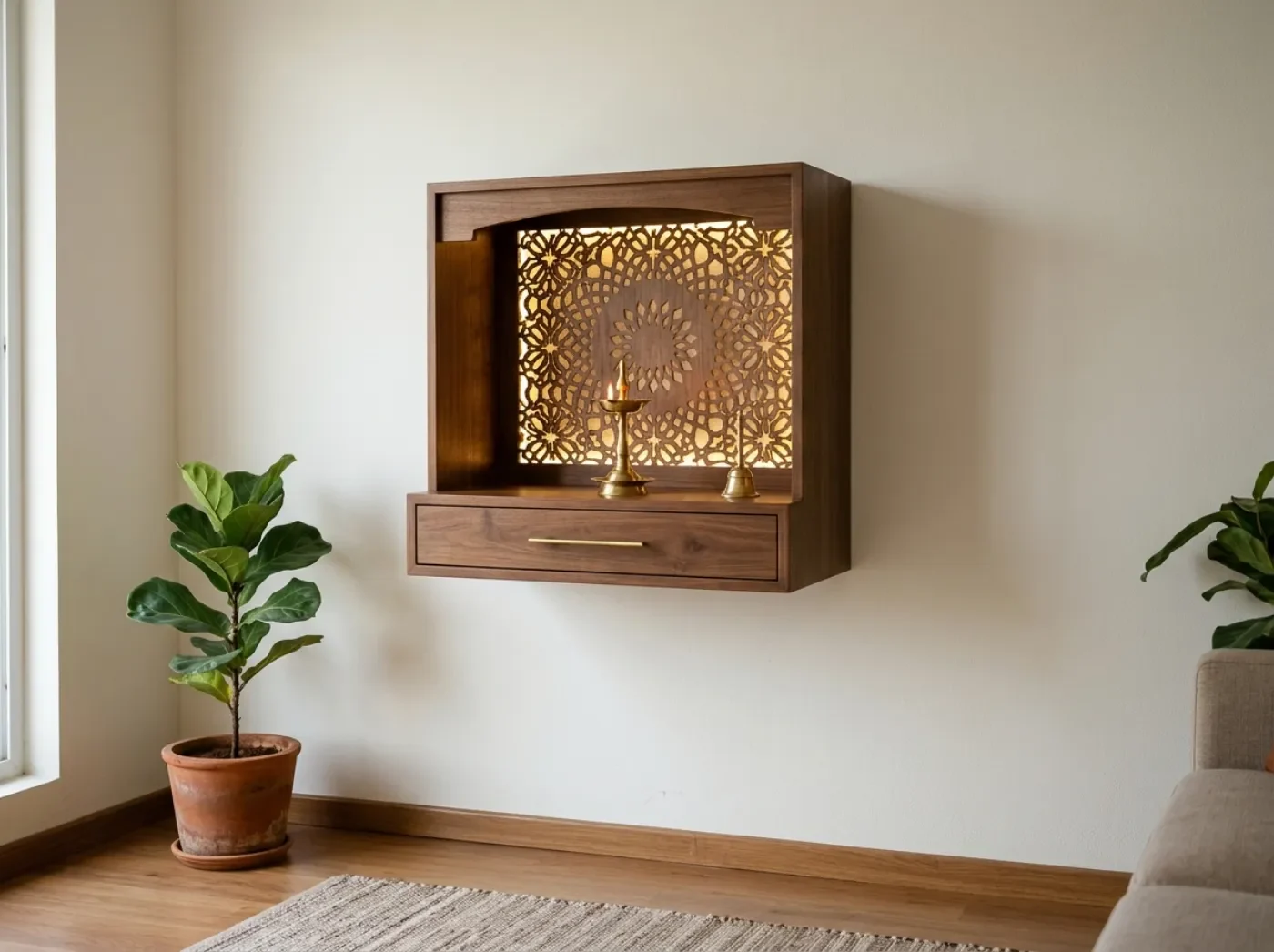
- Pooja area. Soft, warm light inside the unit or a small cove above it.
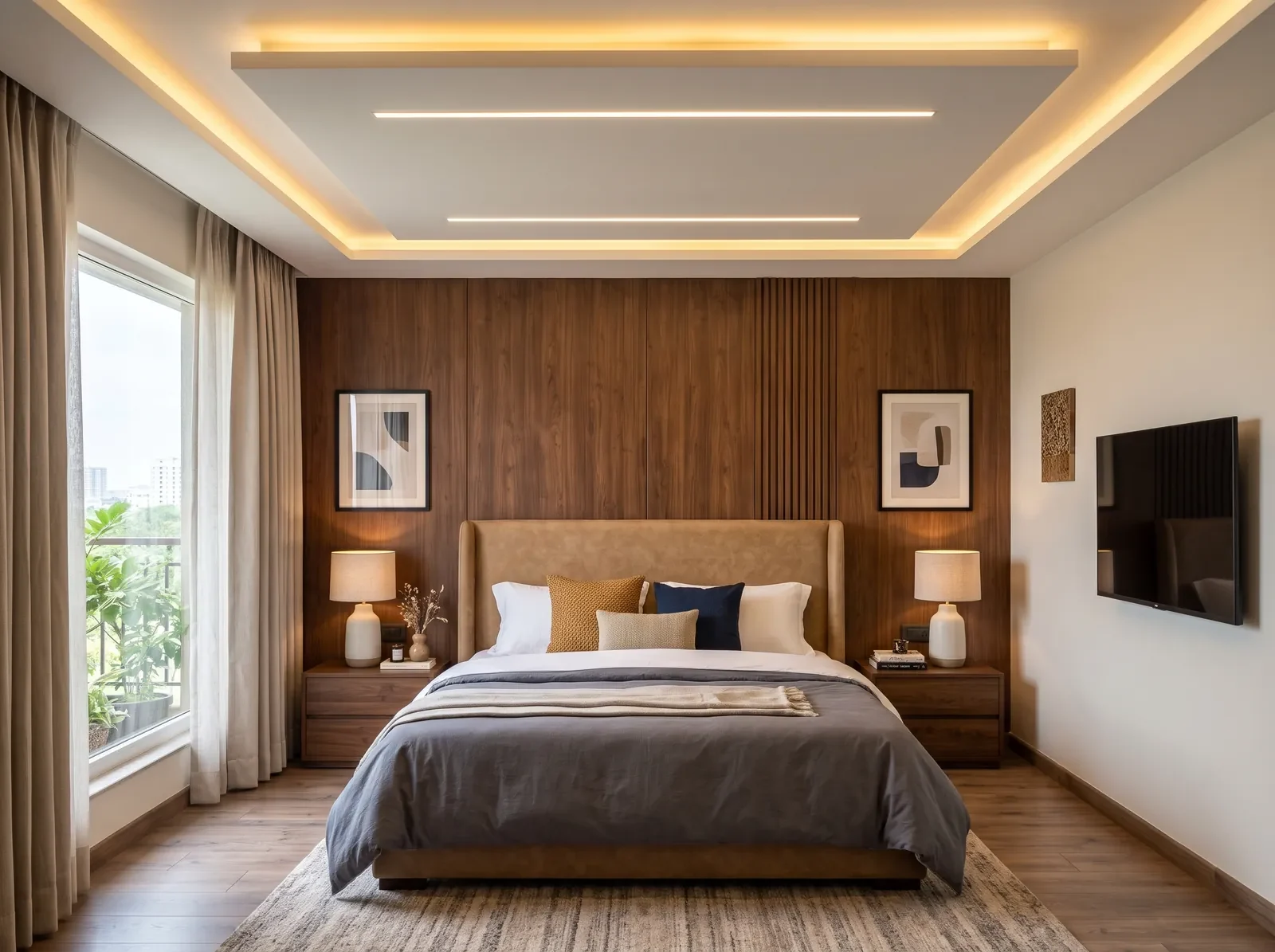
In a 2BHK where living and dining share one space, a single cove across both ties the two areas together. In our bedroom interiors, we mix three layers: ceiling light, reading lights and softer light around the ceiling.
Warm or cool white: what light colour works in each room?
LED strips and profiles are sold as warm white, neutral white or cool white. Here is general industry guidance, not a fixed rule:
- Warm white for living rooms, bedrooms and pooja areas. It flatters wood and fabric in the evening.
- Neutral white for kitchens and study desks, where you need to see detail.
- Cool white sparingly. It can make a living room feel like an office.
Keep one colour per room, because a warm cove beside a cool profile looks like a mistake. Buy each room’s strips from one batch so the colour matches.
Can you have profile lights without a false ceiling?
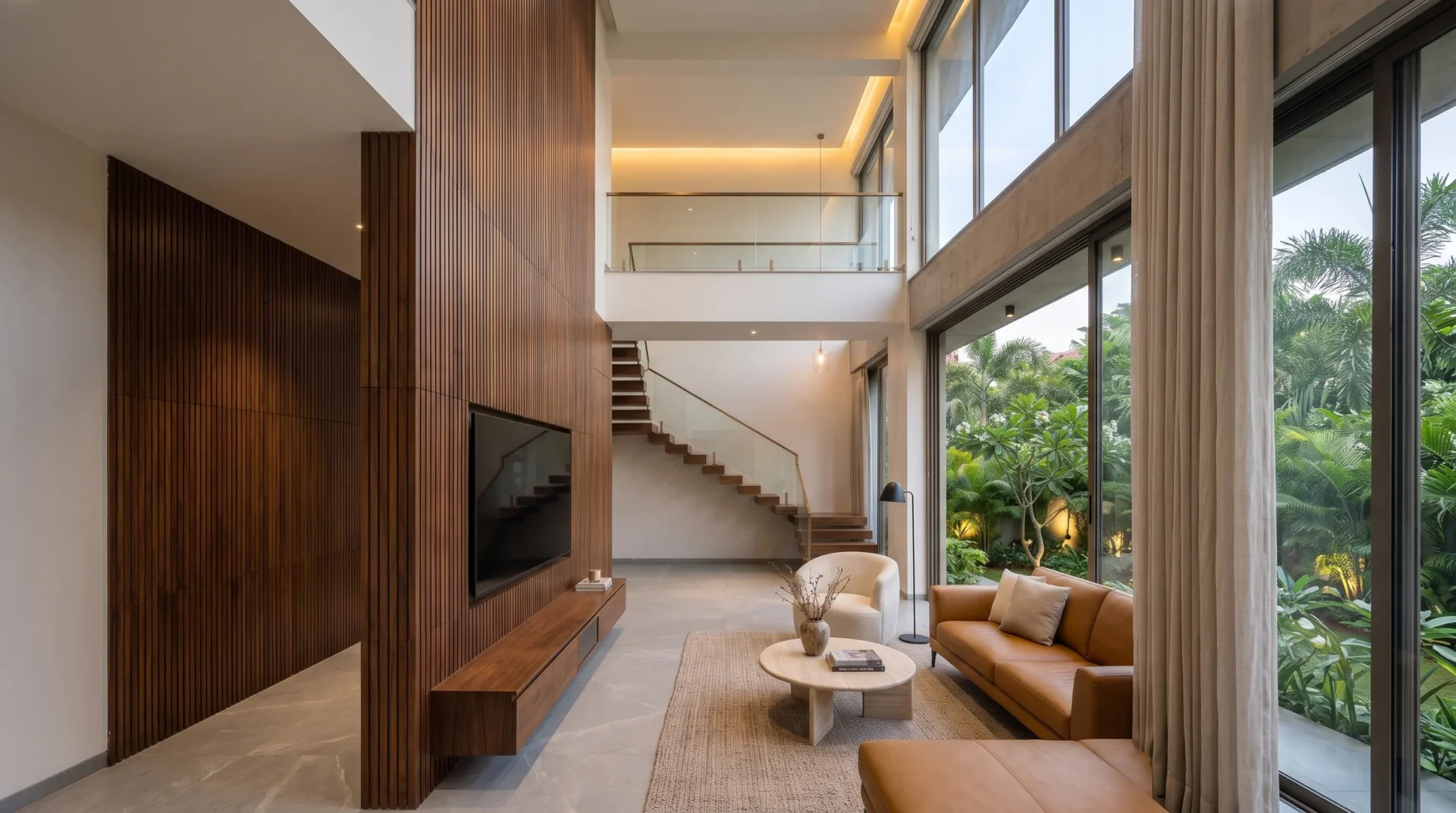
Yes. Surface-mounted profiles fix directly onto the slab, and corner profiles sit where the wall meets the ceiling. They suit Bengaluru flats with a low slab, because they wash the wall with light and take almost no height.
Where a ceiling is too low for a full false ceiling, lighting can be built into the cabinets instead: strips in the TV unit, crockery unit or a lit niche. Or keep the false ceiling to a border with a cove and leave the centre at full height.
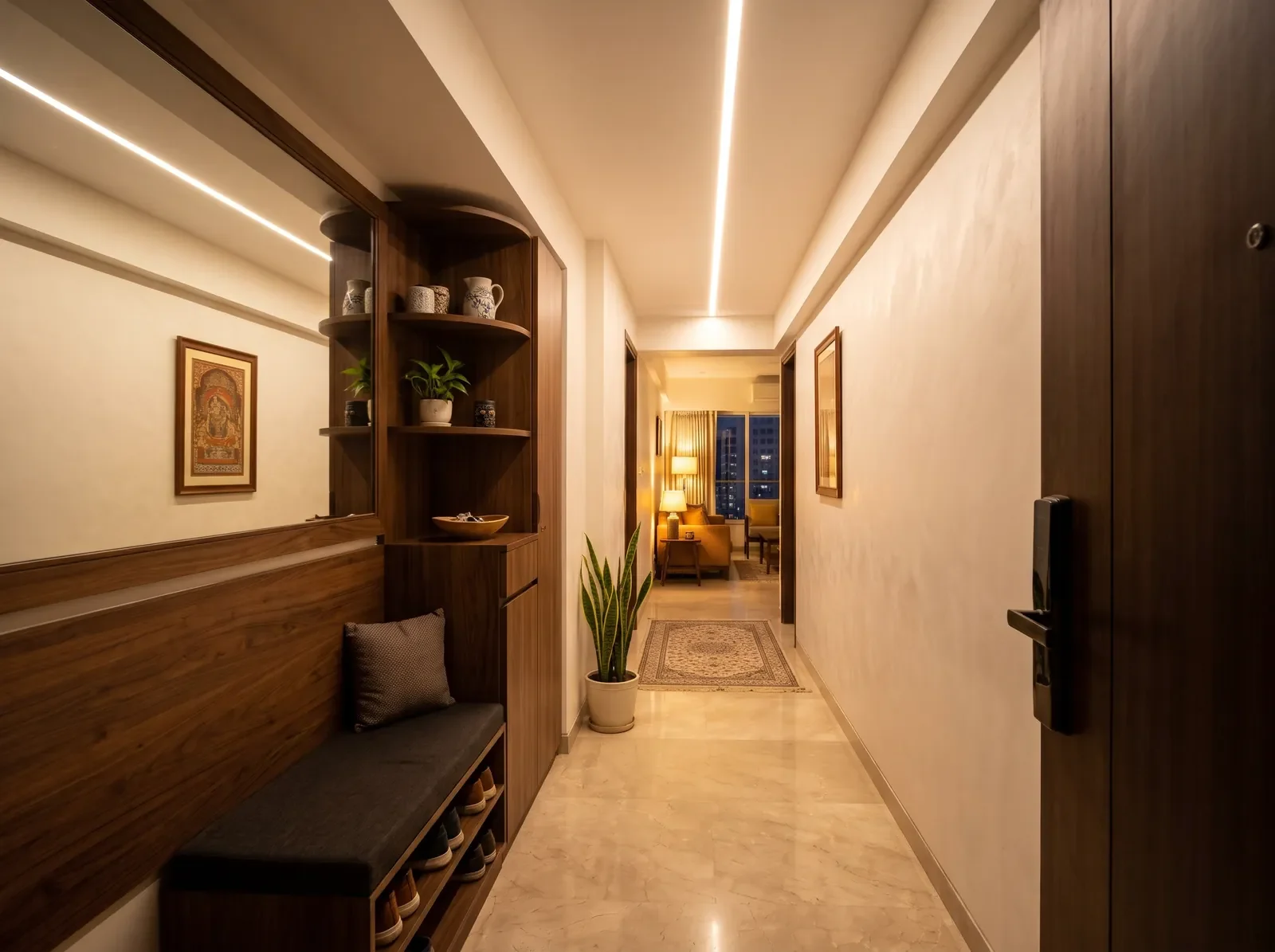
How should ceiling lights line up with the furniture?
Our designers draw the ceiling, the cove lights and the spotlights together with the TV wall, the bed and the dining table, so every light lands where you need it. That’s how we approach the false ceiling designs we plan for Bengaluru homes.
- Fix the furniture first. Sofa, TV wall, bed and dining table go on the plan before any light.
- Run profile lines with the room, not across it. A line parallel to the TV or bed wall reads as design.
- Centre the pendant on the table, not the room.
- Keep bright fittings off the bed. Light the edges of the ceiling instead.
- Put each light on its own switch. Spotlights over the TV wall, cove light for evenings, reading lights by the bed.
For heights and hall ideas, see false ceiling designs for the hall. For bedrooms, our master bedroom false ceiling designs show cove and profile lines above the bed wall.
What ceiling lights work best in a kitchen?
A plain ceiling with recessed downlights, a strip or profile over the counter, and lighting under the wall cabinets. The under-cabinet light matters most, because ceiling light falls behind you and casts your shadow on the counter. If the kitchen opens to the living room, match the light colour across both. Our post on open kitchen design for Indian cooking covers shared finishes and sightlines.
What should you check for upkeep and access?
Every LED strip runs on a driver. As general guidance, ask your designer where each driver will sit and how it can be reached, through a cove you can reach into or a small access panel, so a fault doesn’t mean cutting the ceiling. A diffuser also keeps dust off the strip.
Keep a short spare length from the same batch, so a later replacement matches.
Plan your ceiling with the rest of the home
At Q Oak, false ceilings and lights show as their own lines in your quote, prepared from your floor plan. Once the advance is paid, we measure the home and your designer shows every room in 3D, lights included, before anything is made. Ask for an itemised quote for your home.
FAQs
Are corner profile lights good for a living room?
Yes, especially in flats with a low slab. They wash the wall with light and need almost no ceiling height.
What ceiling lights work in a kitchen?
Recessed downlights for general light, a strip or profile over the counter, and lighting under the wall cabinets so you aren’t working in your own shadow.
Can each light be on its own switch?
Yes. We plan spotlights, cove light and reading lights on separate switches, so you choose bright or soft light.
What happens if an LED strip fails?
The strip or driver is replaced. That is why the driver should sit where it can be reached, through the cove or an access panel, and why a spare length from the same batch helps.