Quick answer
A fluted panel is a board or sheet of glass with rounded vertical grooves running along it. In a home it works best in three places: the TV wall, wardrobe shutters and partitions. The two choices that decide how it looks and lasts are the finish (veneer, laminate or PU) and exactly where the fluting stops.
Fluted panels are everywhere right now, and most of what you see online is stick-on PVC sold by the sheet. That is a different product from what a designer draws. We treat fluting as joinery, planned with the furniture around it, as part of our full home interiors work. It turns up in kitchens too: a fluted island base or tall-unit panel in our kitchen interiors picks up the living room finish across an open plan.
This guide covers where fluted panel design works, which finish to pick and the details that make a fluted wall look neat.
What is a fluted panel, and where does it work in a home?
A fluted panel has a row of rounded grooves, usually vertical, cut or pressed into its face. The grooves catch light and throw thin shadows, giving a plain wall depth without pattern. Vertical flutes also make a wall look taller.
The places it earns its keep:
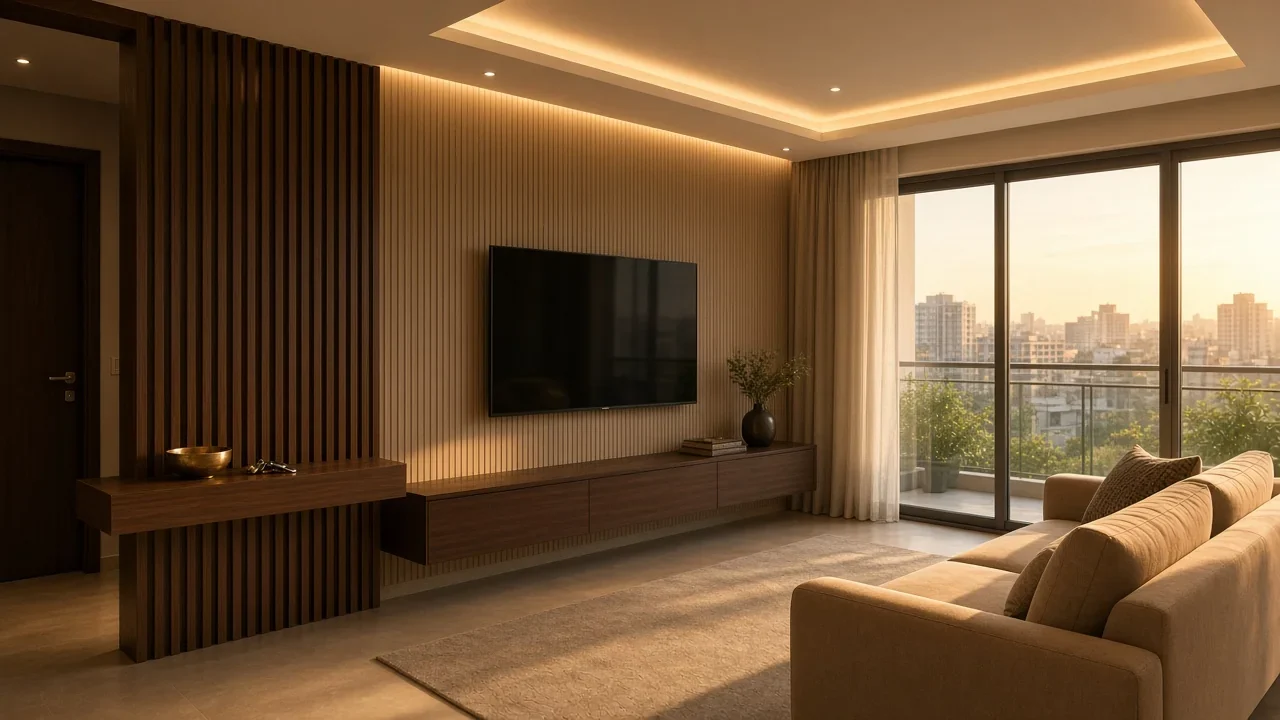
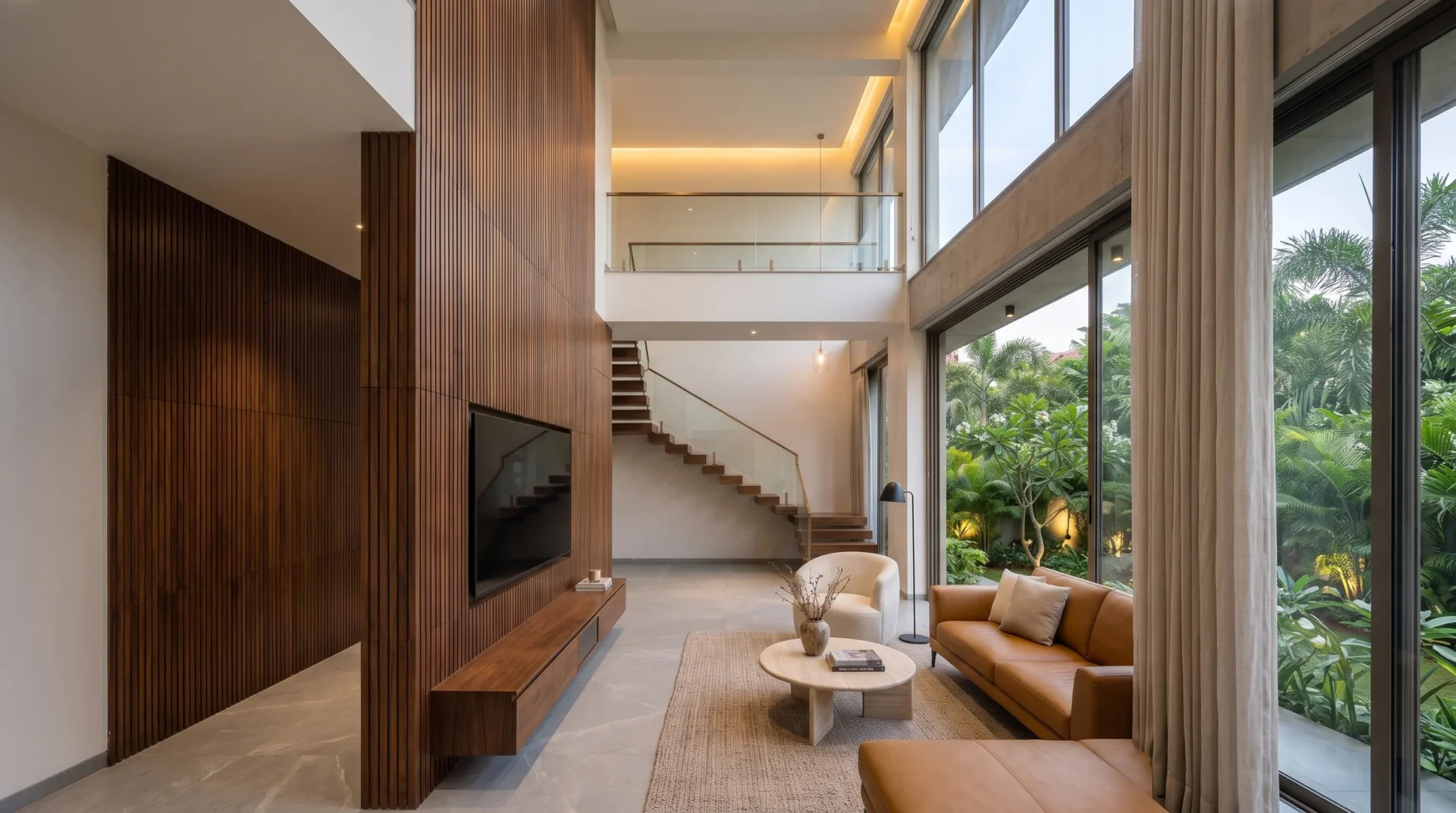
- TV wall. The most common use, and the flutes hide the joints between panels.
- Wardrobe shutters. Fluted lower shutters with plain lofts above, or one fluted shutter as an accent.
- Partitions and glass. Fluted glass for kitchen and dining partitions, crockery units and pooja doors.
- Foyer and bed wall. A fluted shoe unit or headboard wall in the same finish as the living room.
It works less well in wet areas or on surfaces you knock into every day.
Which finish should you choose: veneer, laminate or PU flutes?
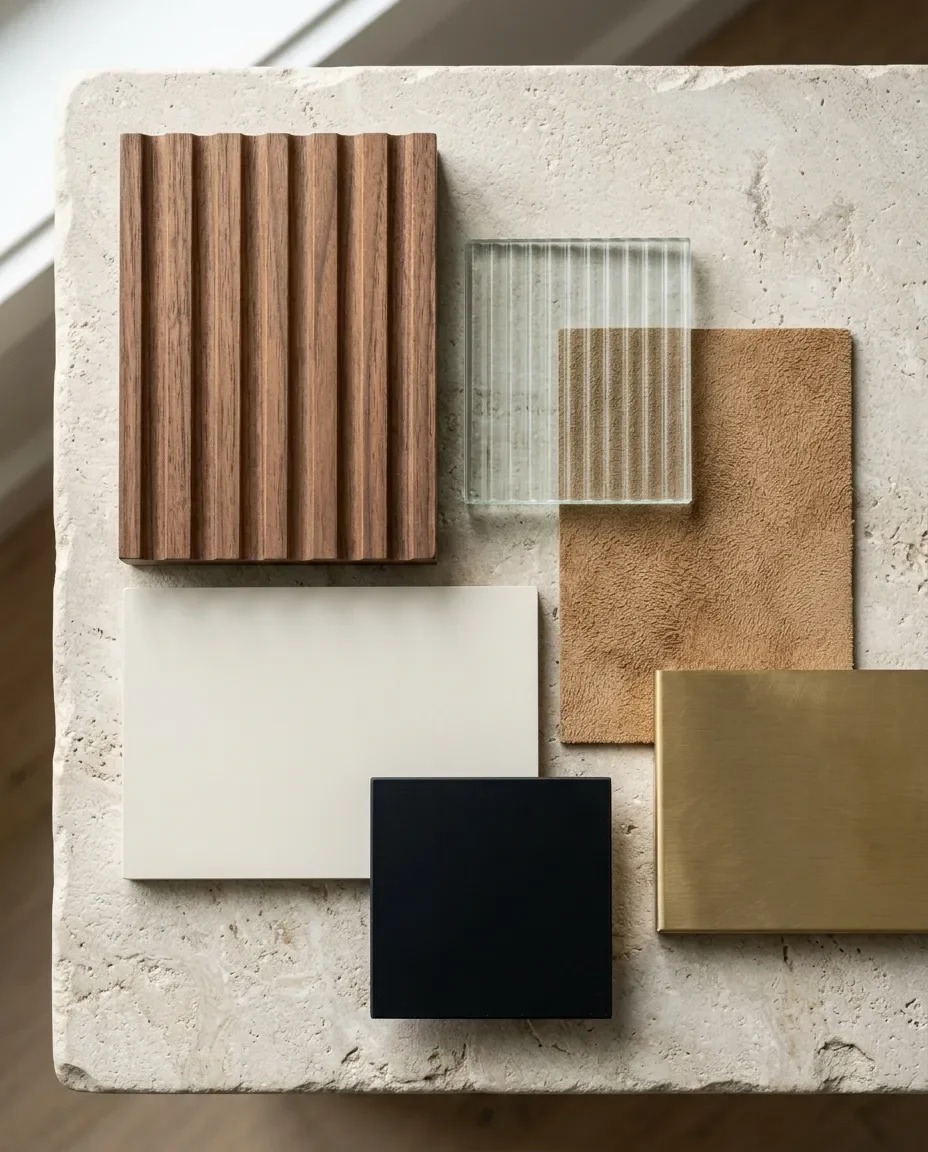
| Finish | Looks like | Best for | Keep in mind |
|---|---|---|---|
| Veneer | Real wood grain, each panel slightly different | TV walls, bed walls, wardrobes in dry rooms | Softer surface, polished after fitting |
| Laminate | Printed woodgrain or solid colour, every panel matches | Busy walls, kids’ rooms, wardrobes | Edges show a thin band |
| PU | Smooth painted finish in any colour | Calm, furniture-like walls and shutters | Takes longer to make |
| Fluted glass | Ribbed glass that blurs what’s behind | Partitions, crockery and pooja doors | Needs a strong frame |
Veneer flutes look richest on a living room wall because the grain runs down each groove. Laminate is the practical pick for walls that take knocks. PU suits a soft single-colour look, like an off-white fluted wall around walnut niches. For the full comparison, see laminate vs veneer and laminate, acrylic or PU shutters.
How do you design a fluted TV wall with storage and lighting?
Start with the TV, not the panel. The wall is drawn around the screen you have or plan to buy, at the right height from the sofa, with power and data points planned behind the panel so no cables show. Our TV unit designs page shows the layouts we build most often.
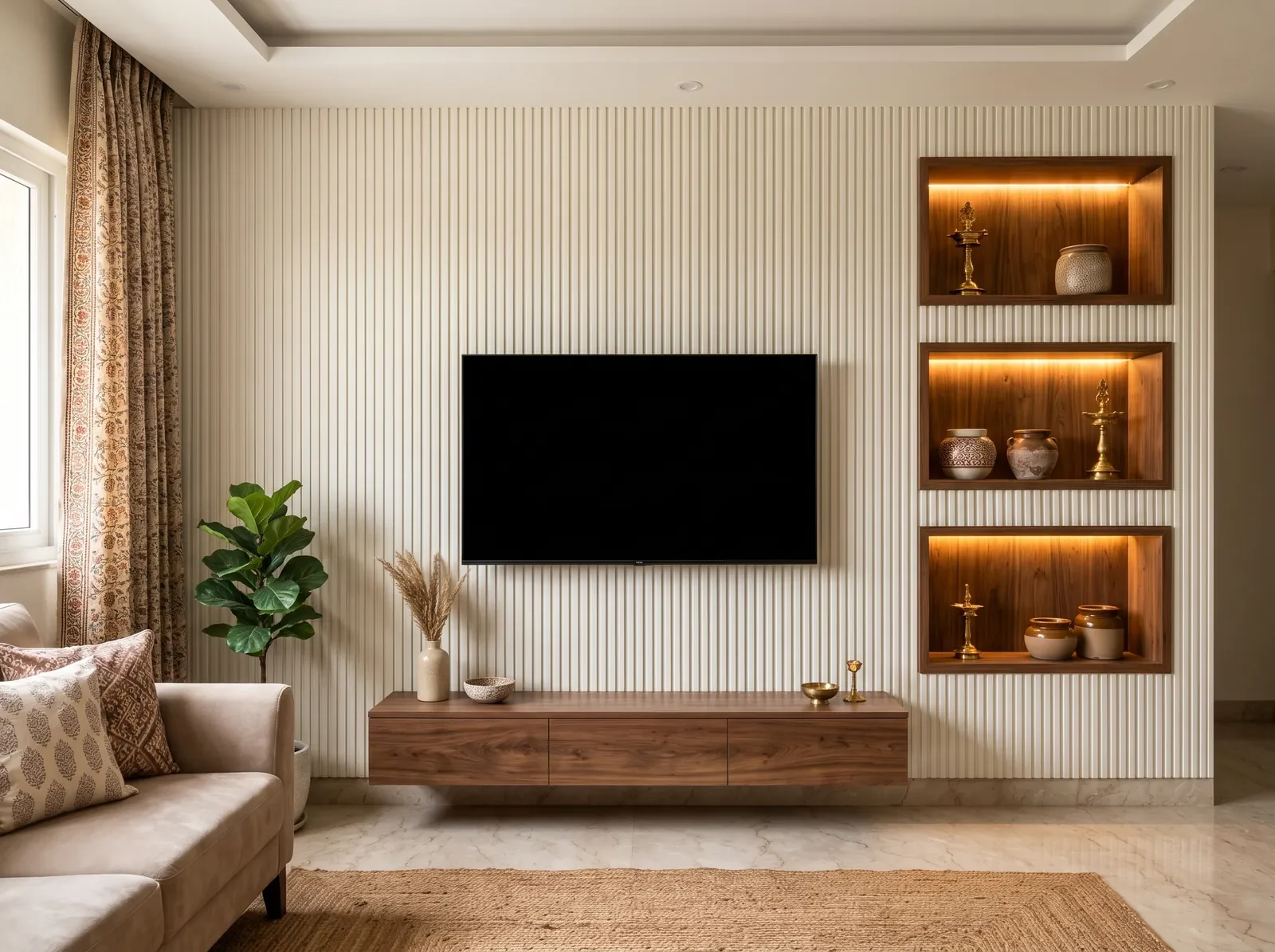
Three things make a fluted TV wall look finished:
- Where the flutes stop. Decide this early. Switchboards look best in a flat band or a frame set into the fluting, or moved to a plain section beside it. At the top, run the flutes to the false ceiling or stop them under a clean reveal. Next to a door or window, end on a full groove, never half of one.
- Niches and light. A lit niche set into a fluted wall, or an LED strip along one edge, grazes across the grooves and shows off the texture after dark.
- Matching finishes. Because the panels are made with the TV unit and shutters in our JP Nagar factory, the grain and colour carry across the room.
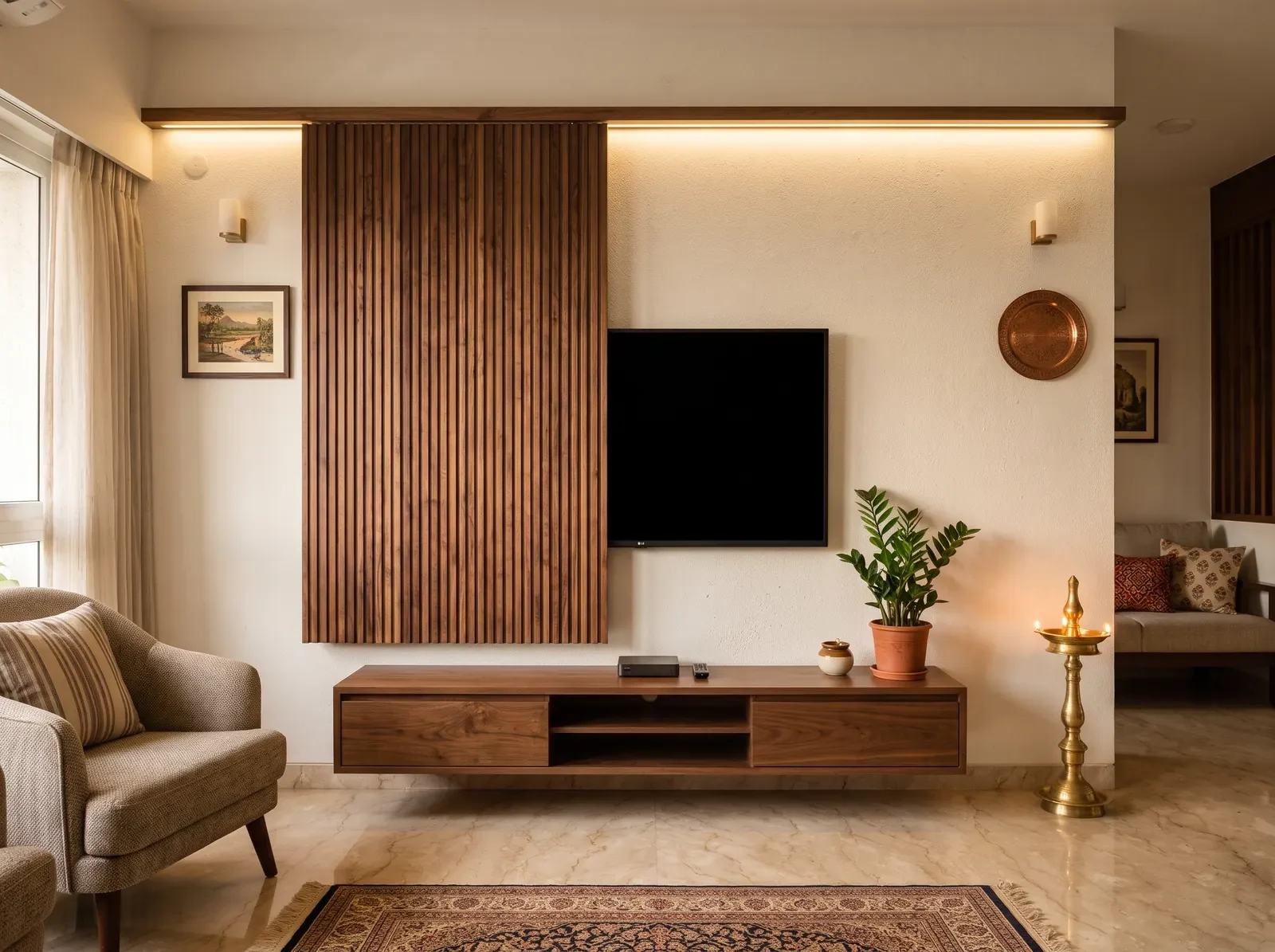
One idea most homeowners haven’t seen: a fluted panel on a top track that slides across to cover the TV when it’s off, so the wall reads as panelling. For more layouts, read our TV unit design ideas.
How are fluted wall panels fitted?
Stick-on sheets are glued straight to the wall. Ours are made in the factory with the TV unit, wardrobe or panelling, then fitted on site with the rest of the room. The electrical points are planned first, so there are no patchy cut-outs.
Can wardrobe shutters and partitions be fluted?
Yes. On wardrobes, fluting works best on part of the front: lower shutters, a single accent shutter, or a strip beside a mirror. A full wall of fluted shutters can look busy. Fluted fronts can sit on hinged or sliding wardrobe designs, and you can see the options at our JP Nagar and Whitefield studios.
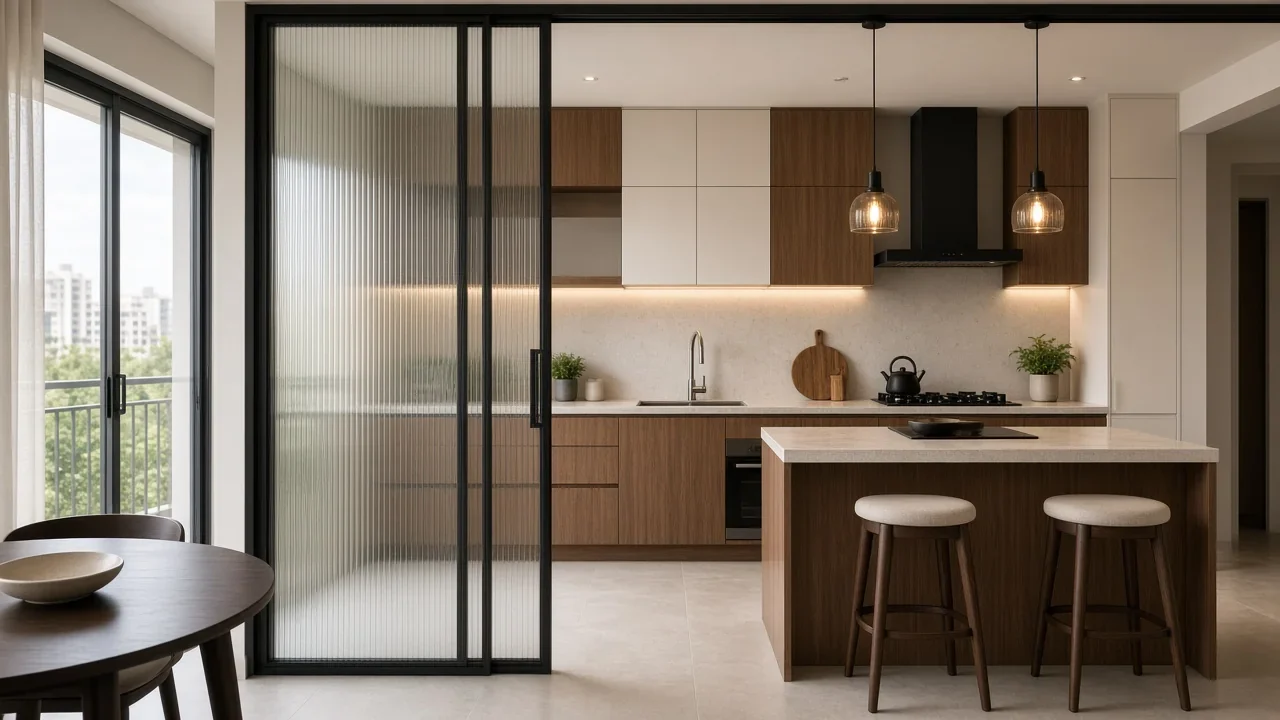
Fluted glass is the partition favourite. Between a kitchen and dining area, it lets daylight through while blurring the mess on the counter, and on a sliding frame it closes off cooking smells when you need it.
How do you keep fluted panels clean?
Grooves collect dust, and Bengaluru homes see plenty of it. A soft brush on the vacuum, run down the flutes every week or two, does most of the work. Then follow the finish:
- Laminate: wipe with a damp cloth.
- Veneer: dry or slightly damp cloth; the polish can be refreshed over the years.
- PU: damp cloth with mild soap.
- Fluted glass: glass cleaner on a soft cloth, wiping along the ribs.
Wider, shallower flutes are easier to clean than very fine ones.
How do you estimate fluted panelling for a wall?
We work it out from your floor plan. Fluted panelling shows as its own line on your itemised quote, with the finish, board and wall size named, so you can compare it with a plain panel before deciding. Measuring and 3D views follow once the quote is final and the advance is paid, and every Q Oak home carries a 15-year material warranty.
Want a fluted TV wall, wardrobe or partition drawn for your home? Share your floor plan and get an itemised quote.
FAQs
Is fluted glass private enough for a partition?
It blurs shapes, so it hides a cluttered counter well, but you’ll still see light and movement. For a bedroom, frosted glass or a solid lower panel gives more privacy.
Can fluted panels hide a TV?
Yes. A fluted panel on a top track slides across the screen when it’s off. Plan it with the TV unit from the start.
Do fluted panels suit a small living room?
Yes, used on one wall. Vertical flutes make the room feel taller, and a light finish such as off-white PU or a pale woodgrain laminate keeps it from feeling heavy.
Are fluted panels covered by the 15-year material warranty?
Every Q Oak home comes with a 15-year material warranty. Your designer explains exactly what it covers, item by item, when you receive your itemised quote.