A designer replies within 4 working hours.
Studios in JP Nagar and Whitefield, open 7 days.
A designer replies within 4 working hours.
Studios in JP Nagar and Whitefield, open 7 days.
Both give you the look of wood on a shutter or a wall panel. Veneer is a thin slice of real wood; laminate is a printed woodgrain under a hard surface. Here is where each one belongs in your home.
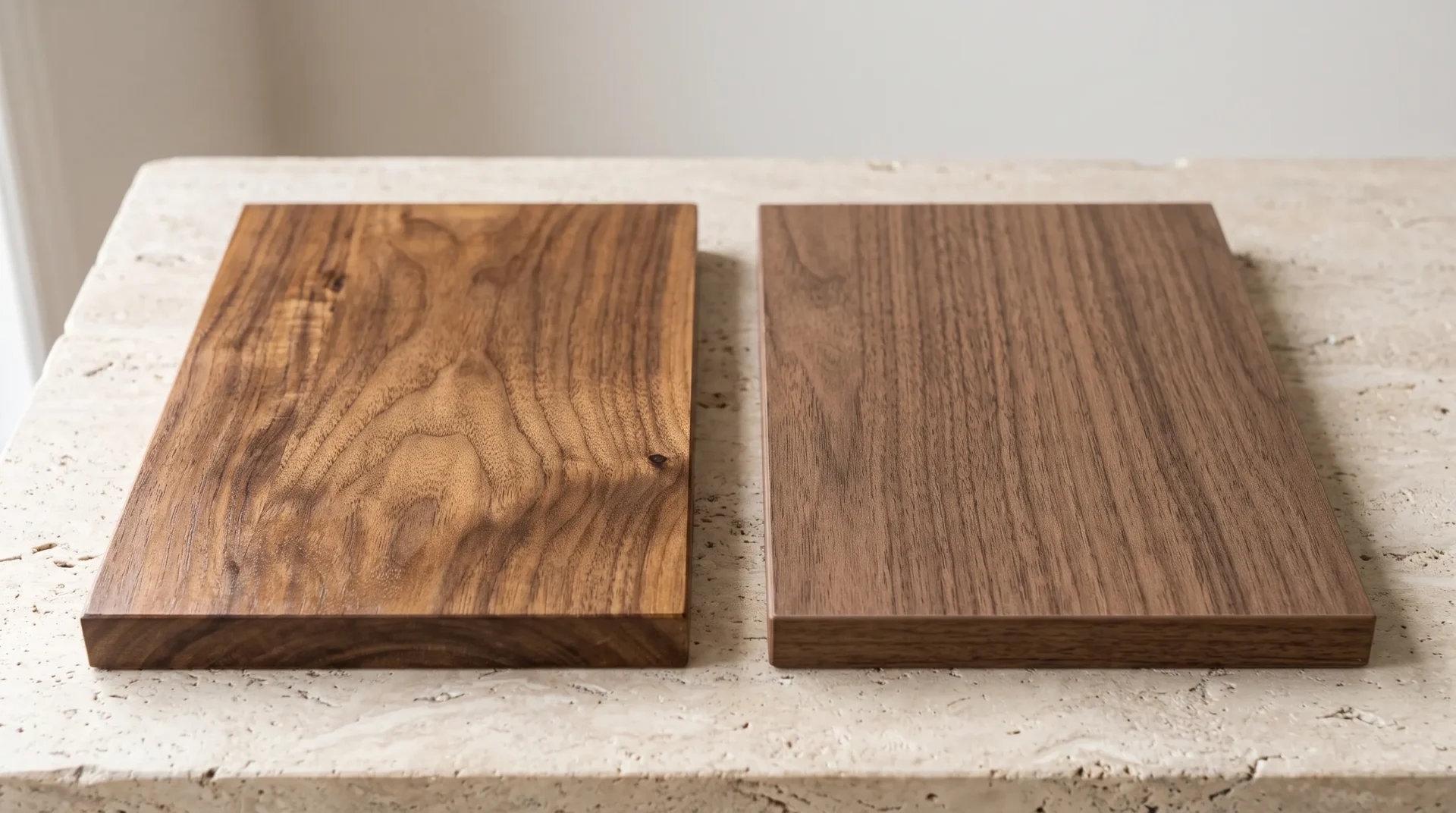
Laminate for the surfaces that work hard, veneer where you want real wood to be seen and touched.
A printed woodgrain bonded under a hard, wipeable surface. Every panel matches, it resists scratches and moisture well and needs no polishing. The practical choice for kitchens, utility and kids’ rooms.
A thin slice of real wood on a board, so no two panels are the same. It is polished after fitting, can be refinished years later and costs more. It suits wardrobes, TV walls, panelling and headboards.
Many homes use veneer on the panels you see first, in the living room and the master bedroom, and laminate inside wardrobes and in the kitchen.
How they compare on the points clients ask about most.
| Laminate | Veneer | |
|---|---|---|
| What it is | Printed decor paper bonded under a hard resin surface | A thin slice of real wood glued to a board |
| Look | Uniform; every panel matches | Natural grain; every panel is different |
| Finish | Ready to use, matte or textured | Polished after fitting, matte or gloss |
| Scratches and knocks | Resists them well | Softer; marks can be sanded and refinished |
| Water and steam | Handles them well | Best kept away from wet areas |
| Care | Wipe with a damp cloth | Dry or slightly damp cloth; polish refreshed over the years |
| Relative cost | Lower | Higher |
| Where we suggest it | Kitchens, utility, kids’ rooms, wardrobe insides | Wardrobes, TV walls, wall panelling, headboards |
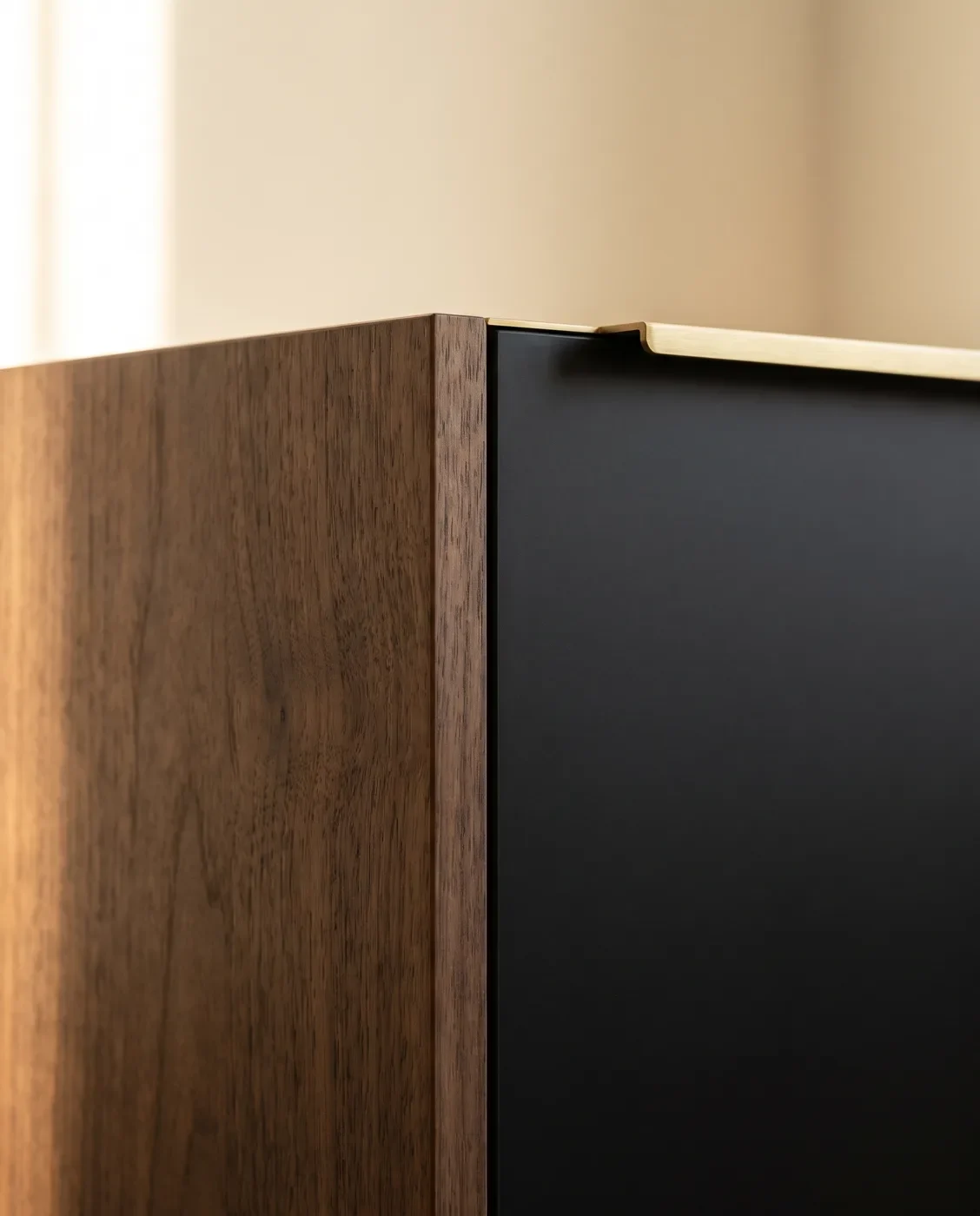
Your designer helps you decide where veneer is worth it and where laminate will serve you better, and shows you both at the studio.
Yes. Veneer is a thin slice cut from a log and glued to a board, so it has the grain and colour of real wood. Laminate shows a printed image of wood under a hard surface.
Laminate resists everyday scratches and moisture better. Veneer is softer, but it can be sanded and polished again years later, which laminate cannot.
We suggest laminate, acrylic or PU for kitchen shutters, where water and steam are daily. Veneer suits rooms that stay dry, like wardrobes, the TV wall and panelling.
Yes. We make veneer wall panelling for TV walls, bed walls and foyers, matched to the shutters in the room.
Yes. Wardrobe shutters can be laminate, acrylic, PU or veneer, and glass and mirror shutters are also available. See wardrobes.
Yes. Our studios in JP Nagar and Whitefield have shutters, laminates and hardware you can see and touch, and you can visit our JP Nagar factory by appointment.
Yes. Every Q Oak home comes with a 15-year material warranty. Your designer explains what it covers with your quote.
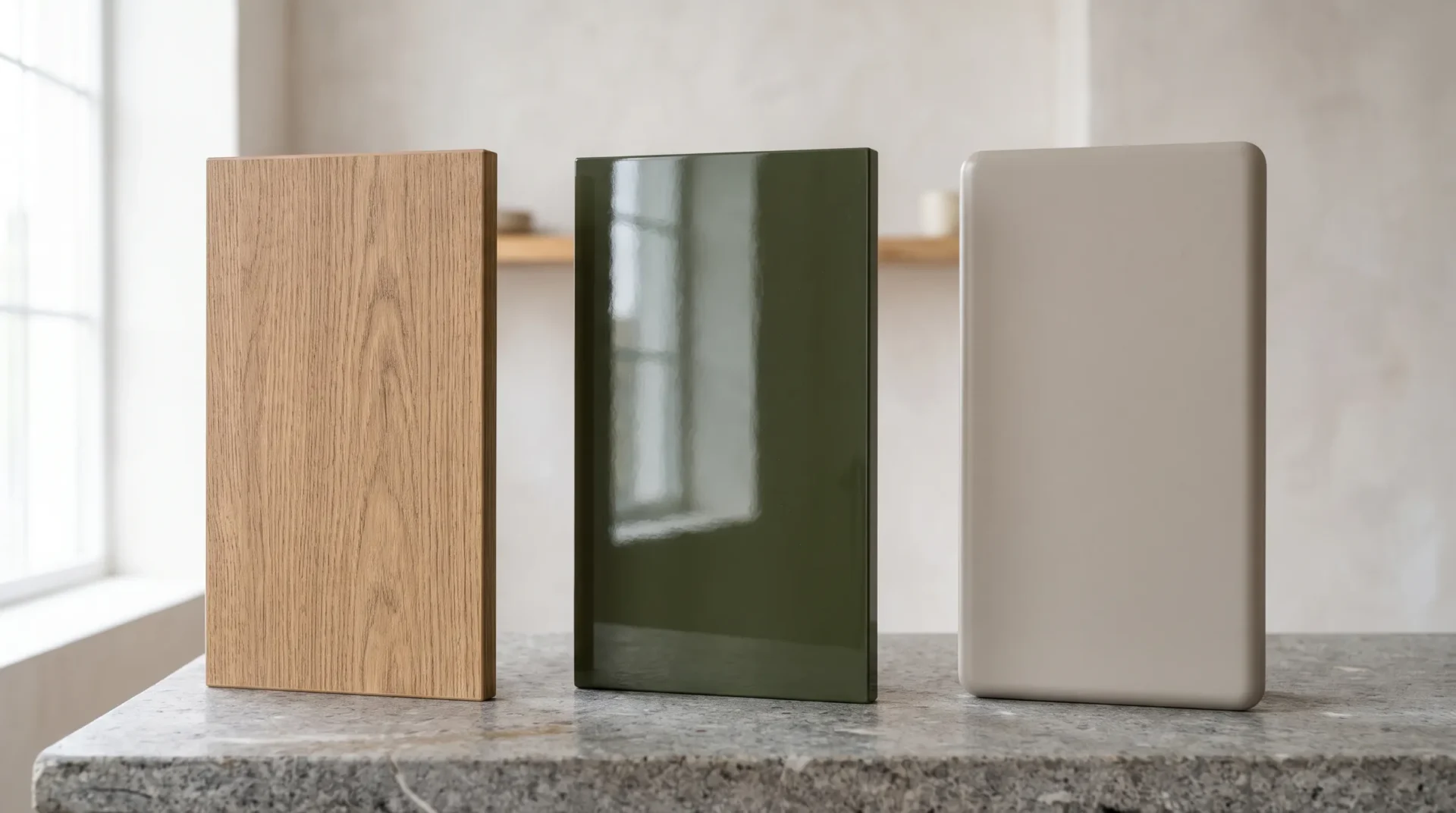
Three shutter finishes compared on look, wear and care.
Share your floor plan. A designer calls you, goes through it room by room and helps you choose materials for each one.
We use your details only to arrange your consultation.
Tell us about your home. A designer calls you within 4 working hours and asks for your floor plan to prepare your quote.
We use your details only to arrange your consultation.